
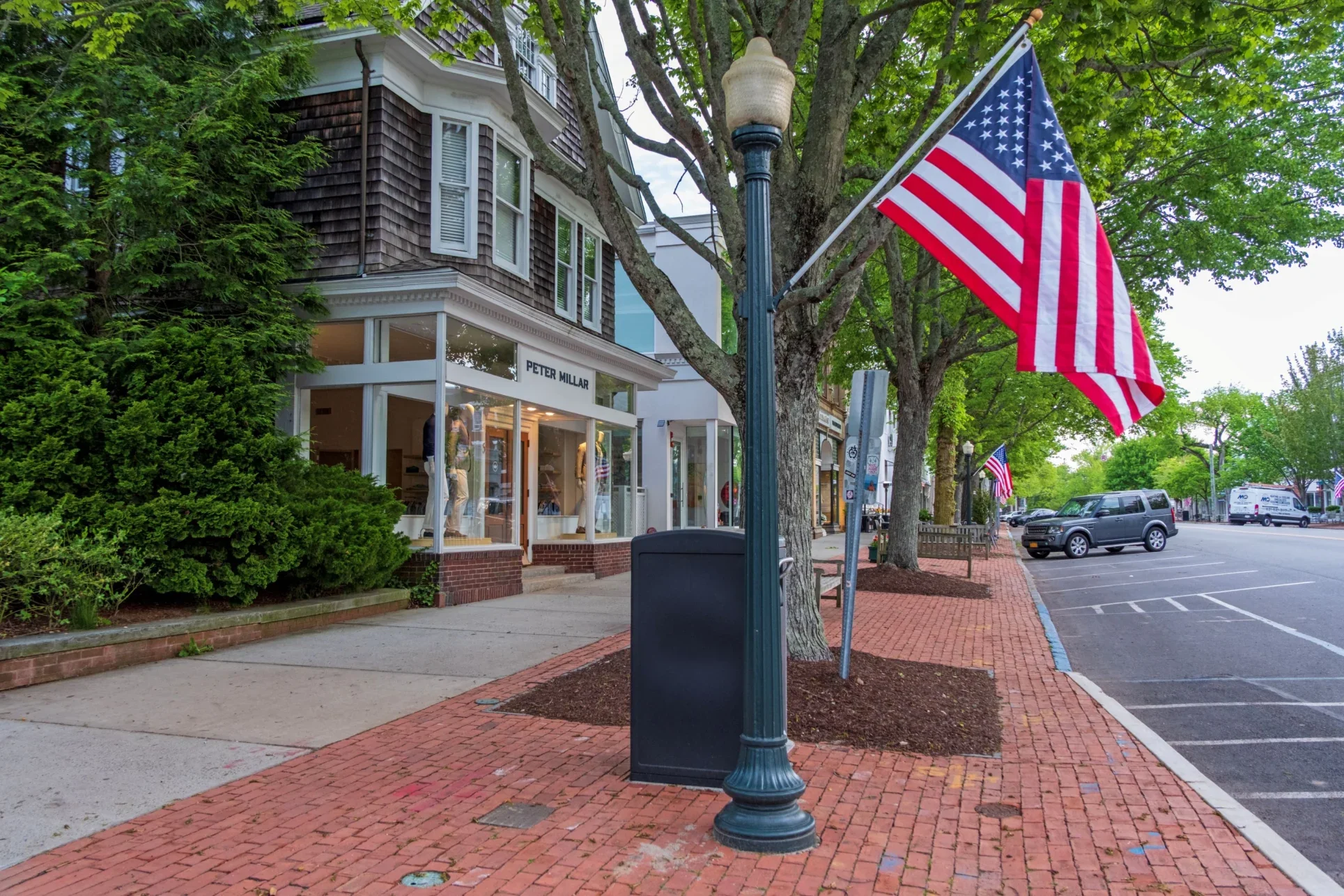
Southampton, NY Mold and Indoor Air Quality Testing
Independent mold testing and mold assessments, indoor air quality testing, home inspections, construction consulting, and water quality testing from a NYS-licensed assessor who was born and raised in Southampton. Our office is at 30 Main Street in the Village, upstairs from Sant Ambroeus.
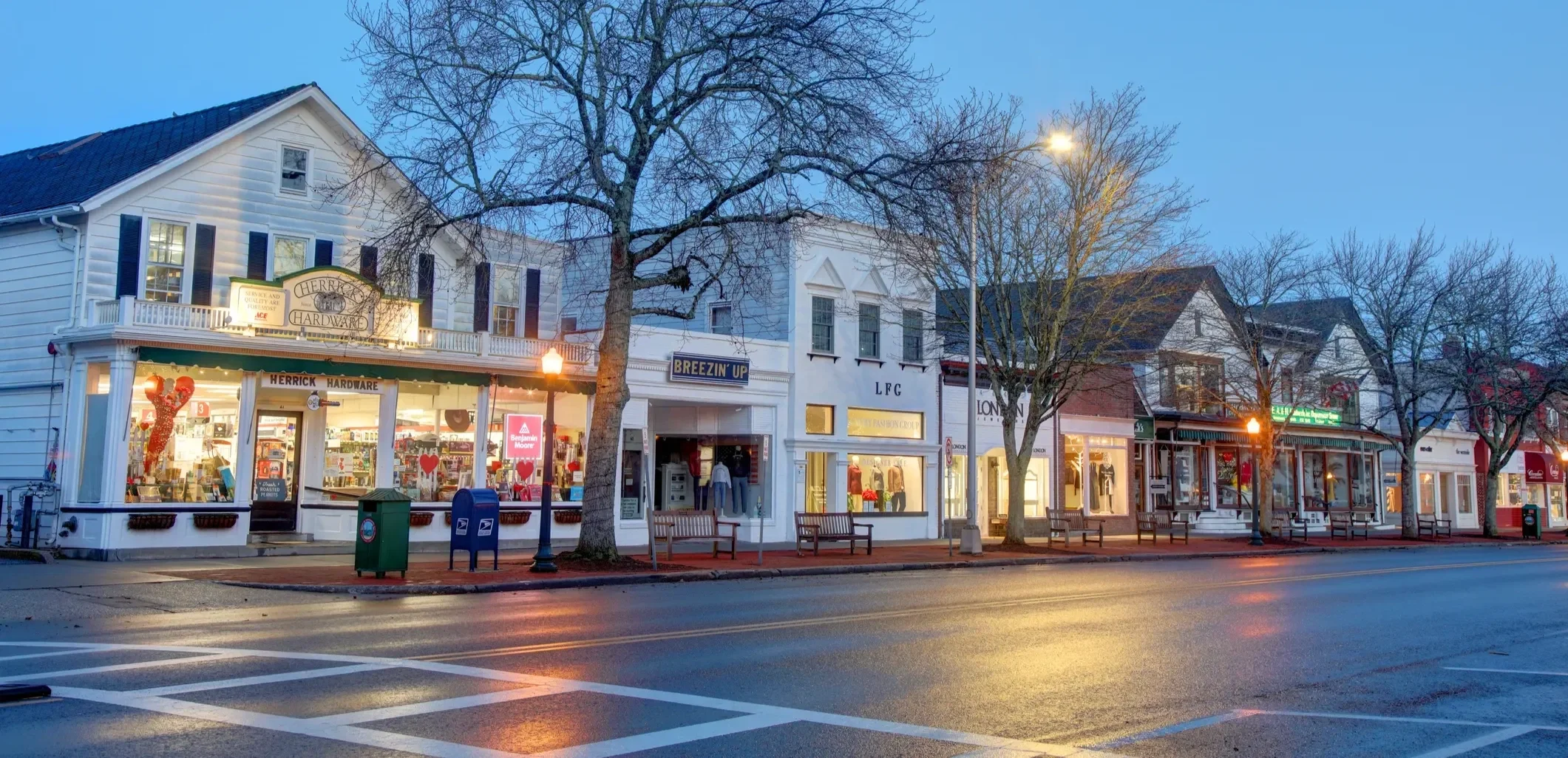
A Southampton Office for Southampton Homes
I was born and raised in Southampton. Casablanca Environmental & Building Diagnostics works out of 30 Main Street in the Village, and most of our work is a short drive from that office: the Village, Shinnecock Hills, Tuckahoe, North Sea, Noyac, Water Mill, Bridgehampton, and Sagaponack.
I have been in and around these houses most of my life: the old homes in the Village's historic districts, the summer houses that sit closed from fall to spring, the waterfront houses on the ocean and the bays, and the new construction that goes up every winter. Each type has its own moisture patterns, and most of the mold and air quality problems I am called about trace back to one of them.
We usually respond the same day or within 24 hours, and a house in the Village is minutes from the office when a caretaker finds a leak or a musty closet during a pre-arrival walkthrough.
Bayron Alvarez, NYS Licensed Mold Assessor and NYS Licensed Home Inspector. Meet Bayron
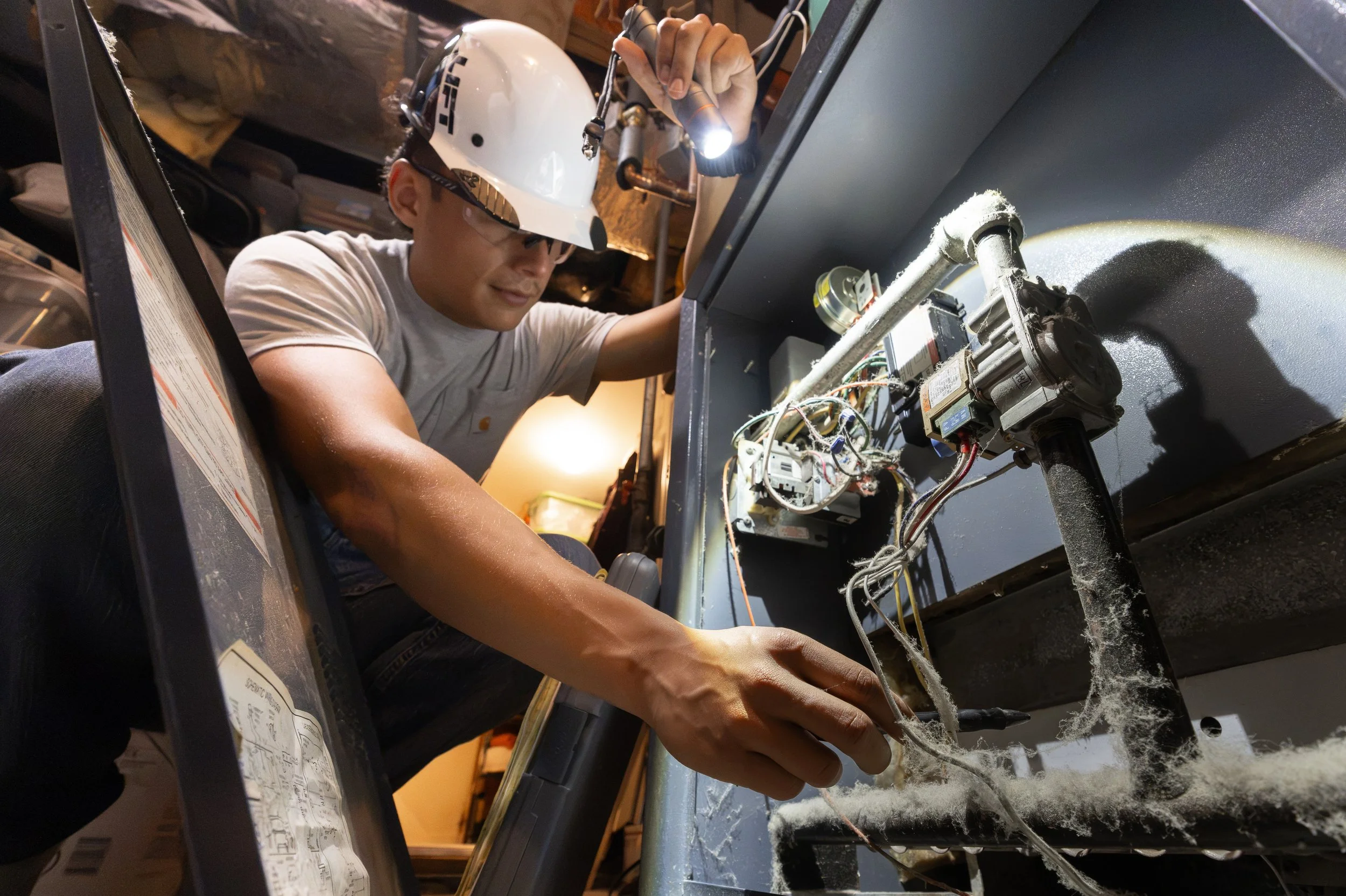
Why Southampton Homes Develop Moisture and Mold Problems
Mold is a moisture problem first. In Southampton the moisture usually comes from one of these sources:
Houses that sit empty for weeks at a time. A house held at a low cooling setpoint while no one is there, or closed with no dehumidification in the shoulder seasons, can stay above 60% relative humidity for weeks. The musty odor at opening is usually the first sign.
Ocean and bay exposure. Parts of the Village are in the FEMA 100-year floodplain, including the oceanfront along Gin Lane and Meadow Lane, the Shinnecock Bay side of Meadow Lane with Heady Creek and Taylor Creek, and the low ground around Lake Agawam and the coastal ponds. Storm-driven rain gets in at windows, doors, and trim on exposed walls, and bay flooding leaves salt in crawl spaces. How wind-driven rain gets inside
Shallow groundwater. On low lots near the ponds, creeks, and bays, the water table can sit close to the underside of a basement slab or crawl space floor.
Old houses. Southampton was settled in 1640, and the Village has four historic districts on the National Register: Beach Road, North Main Street, Wickapogue Road, and the Southampton Village Historic District. Older foundations often have no drainage or vapor control, and later additions and insulation upgrades change how the original walls dry.
Vented crawl spaces under air-conditioned floors. Fiberglass batts between the joists, humid summer air below, and a cold floor above is the most common crawl space mold pattern we find on the East End. Crawl space condensation on the East End
Mechanical equipment and exhaust. Air handlers and ductwork in attics, ductless mini-split heads that have not been cleaned, and bathroom fans that terminate in the attic instead of outdoors.
New construction and major renovations. Framing and sheathing closed in before they have dried, and tight houses whose mechanical ventilation was never set up or balanced.
Southampton Mold Testing and Mold Assessments
Most people call this mold testing. In New York the licensed service is a mold assessment, and the air and surface sampling is one part of it. A mold assessment is a building science investigation that ends in a written report. The mold is the symptom and the moisture is the cause. Our assessments identify both, and the report is written so that a licensed remediation contractor can price the work, perform it, and be verified against it.
What the assessment includes
An interview and building history: leaks, repairs, humidity, how the house is used, and when it is closed.
A moisture investigation with pin and pinless meters, thermal imaging, and temperature, relative humidity, and dew point readings inside and out.
Indoor air quality readings at each sampling location with a TSI Q-Trak XP.
Air sampling sized to the house against two simultaneous outdoor controls, and surface sampling of visible growth, analyzed by EMSL Analytical, an AIHA-LAP accredited laboratory.
A condition classification for each area under IICRC S520 (Condition 1, 2, or 3).
A written report with the findings, the moisture source and its correction, a remediation plan for each Condition 3 area, a good-faith remediation cost estimate, and the clearance criteria.
The on-site portion takes about three to four hours for a typical house.
What we find in Southampton homes
A musty odor at spring opening with no visible growth, traced to high relative humidity while the house was closed.
Growth on the subfloor and joists above vented crawl spaces.
Growth on attic sheathing from bathroom fans venting into the attic, or from air leakage around attic air handlers and ductwork.
Ductless mini-split units with growth on the blower wheel and coil.
Finished basements with polyethylene sheeting behind the drywall.
Pool houses and guest cottages that are closed most of the year.
Water damage behind trim and drywall after storms, at windows and doors on exposed walls.
Remediation plans, support during remediation, and post-remediation verification
Under New York State Labor Law Article 32, mold remediation of an area greater than 10 square feet requires a licensed mold assessor to prepare a written remediation plan before work begins, a separately licensed remediation contractor to perform the work, and a post-remediation assessment before containment comes down. The law prohibits the same licensee from performing both the assessment and the remediation on a property. We perform assessments only.
The remediation contractor's work plan must meet every requirement of our remediation plan (Labor Law §946), and we have the contractor sign our remediation plan and work standards before work begins, so the job is done to the assessor's protocol. During the work we remain available to the owner and the contractor by phone and email to review changed conditions and change orders against the report. Post-remediation verification (PRV) is a separate engagement: visual clearance, moisture clearance, and clearance air sampling in each remediated area against outdoor controls, with a written PRV report.
Buying or selling in Southampton
We work with buyers, sellers, attorneys, and agents inside inspection periods. A home inspection is not a mold assessment: New York's home inspection standards (19 NYCRR Part 197) do not require a home inspector to determine whether mold is present. If a seller's contractor says the house has been "cleared," ask for the passed clearance report from the independent licensed mold assessor, and that assessor's license number.
Southampton Indoor Air Quality Testing
An indoor air quality (IAQ) assessment looks at the air in the house as a whole: humidity, ventilation, particulates, combustion gases, VOCs, formaldehyde, and allergens. A mold assessment answers a mold question. An IAQ assessment is for questions that are broader than that.
When Southampton homeowners call us
Odors or symptoms after new construction or a renovation: spray foam, new cabinetry and millwork, flooring adhesives, paint, and finishes.
Symptoms that ease when you leave the house.
Pre-arrival checks before owners or summer tenants move in.
Humidity, condensation, or a musty odor with no visible source.
Fireplaces, gas appliances, and attached garages: carbon monoxide and venting.
Wildfire smoke and fine particulates.
Sewer or septic odors.
What we measure
Real-time, room by room, against an outdoor comparison: temperature, relative humidity, dew point, carbon dioxide, carbon monoxide, particulates (PM1, PM2.5, PM10), total VOCs, and formaldehyde screening.
Laboratory sampling where it answers the question: VOCs by Summa canister (EPA Method TO-15), formaldehyde by passive badge, mold spore traps, and allergen panels.
The report includes a room-by-room readings table, the full laboratory reports with a plain-English interpretation, photographs and thermal images, and prioritized recommendations.
Independent recommendations
We do not sell air purifiers, filtration, duct cleaning, or dehumidifiers, and we do not accept referral fees. Recommendations start with source control, ventilation, and humidity control, and equipment comes after those.
Southampton Home Inspections
Pre-purchase and pre-listing home inspections by a NYS Licensed Home Inspector who is also a licensed mold assessor. The inspection covers the visible and accessible structure, roof, exterior, attic, insulation and ventilation, plumbing, electrical, HVAC, and basement or crawl space, with photographs and plain-language findings. Reports are typically delivered within 24 to 48 hours.
What a Southampton inspection accounts for
Older houses in and around the historic districts: foundations, framing changed by past additions, older wiring and plumbing, and how the house has been insulated since it was built.
Cedar shingle roofs and complex rooflines, documented by drone where that is safer or more complete than walking the roof.
Multiple structures: pool houses, guest cottages, and detached garages, quoted as part of the scope.
Waterfront and flood-zone properties: crawl space and foundation vents, grading, and evidence of past water.
Moisture behind finished surfaces, located with thermal imaging and confirmed with a moisture meter.
Adding a mold assessment
Because we hold both New York licenses, a mold assessment can be scheduled with the home inspection. It is a separate engagement with its own sampling plan and report, because New York's home inspection standards do not require a home inspector to determine whether mold is present.
Pre-listing inspections for sellers
Since March 20, 2024, New York sellers can no longer give a $500 credit in place of the Property Condition Disclosure Statement, and the statement now includes questions about flood zones, flood insurance, and flood damage claims. It also asks whether the property has been tested for indoor mold. A pre-listing inspection lets a seller answer from documentation and repair or price known conditions before a buyer's inspector reports them.
Southampton Construction Consulting and Owner's Representation
Many Southampton projects are built while the owners are somewhere else. We work on the owner's side during a new build or renovation: we attend site meetings, keep the documentation organized, review submittals and change orders (design approvals stay with the architect or engineer of record), and walk the project at the milestones where problems cost the least to correct. We are not the general contractor on projects where we represent the owner.
Where a building diagnostics background matters
Before insulation and drywall: moisture content of framing and sheathing, window and door flashing, and the weather-resistive barrier.
Before finish flooring: crawl space and basement moisture control, and subfloor moisture readings within the flooring manufacturer's limits.
At mechanical rough-in and startup: duct location and sealing, bathroom and dryer exhaust terminations, dehumidification, and ventilation.
At punch and closeout: a documented walkthrough with photographs and a written punch list.
Village and Town rules that affect the schedule
In the Village of Southampton, construction is permitted from 8 a.m. to 6 p.m. on weekdays and 9 a.m. to 5 p.m. on Saturdays, and not on Sundays or holidays. Pile driving is prohibited on weekends and holidays from Memorial Day through Labor Day. Exterior alterations, new construction, and demolition on landmarks and on properties in the Village's historic districts require a certificate of appropriateness from the Board of Architectural Review and Historic Preservation; ordinary repairs that do not change materials, color, or appearance are exempt. Outside the Village, the Town of Southampton and the Village of Sagaponack set their own construction hours. New houses, and in priority areas many additions, require a nitrogen-reducing I/A septic system under Suffolk County, Village, or Town rules. We build these into the project schedule.
How engagements are structured
Hourly consulting for a specific question, monthly support during active construction, or milestone visits (rough, pre-close, punch, and closeout). Site meeting notes go out with action items and photographs after every visit.
Southampton Water Quality Testing
The Village of Southampton is on public water from the Suffolk County Water Authority (SCWA), and SCWA mains reach parts of Bridgehampton, Water Mill, Sagaponack, and North Sea. Private wells, both drinking water and irrigation, are still in use on properties across the Town. We collect samples under chain of custody for analysis by a New York State ELAP-certified laboratory and read the results against the current limits.
Private wells
A private well is not regulated by the public water rules; outside of a sale, the owner decides what to test and how often. We test for bacteria, nitrate, metals, and volatile organic compounds, and for PFAS and 1,4-dioxane where the location calls for it. New York's limits for public water systems are 10 parts per trillion each for PFOA and PFOS and 1 part per billion for 1,4-dioxane, and we compare private well results against them. Suffolk County identifies nitrogen from cesspools and septic systems as the largest single cause of degraded water quality in the county, which is why nitrate belongs on every well test here.
Houses on public water
SCWA reported in June 2025 that all of the treated water it supplies meets the federal PFOA and PFOS standards. Testing at the tap looks at what happens after the water reaches the house: lead and copper from plumbing and fixtures (the federal lead-free requirement for pipe and solder dates to 1986), treatment equipment that has not been maintained, and water that has sat in the plumbing through the off-season.
Real estate transactions
Suffolk County Code Chapter 840 requires the buyer of a house on a private well to obtain written certification from a New York State-approved laboratory that the water meets county health standards before closing, unless the contract of sale waives it. The Property Condition Disclosure Statement also asks for the water source and whether water quality and/or flow rate have been tested. The Suffolk County Department of Health Services tests private wells, but a sample can usually be collected only within six weeks of payment, results take at least eight weeks after sampling, and the department says it cannot ensure results in time for contract or closing dates. Buyers use a commercial ELAP-certified laboratory instead. Sampling on site takes 30 to 60 minutes.
Areas We Serve Around Southampton
From our Main Street office we cover the Village of Southampton and the surrounding hamlets and villages:
Village of Southampton
Shinnecock Hills
Tuckahoe
North Sea
Noyac
Water Mill
Bridgehampton
Sagaponack
FAQs
Is mold testing the same as a mold assessment?
Most people search for mold testing or a mold inspection. In New York the licensed service is called a mold assessment, and for any area greater than 10 square feet it must be performed by an assessor licensed by the NYS Department of Labor under Labor Law Article 32. The testing is one part of it. Our assessments include the moisture investigation, air sampling against outdoor controls, surface sampling of visible growth, and a written report with a remediation plan for any area that needs remediation.
What does mold testing cost in Southampton?
Pricing is set by scope: the size of the house, the number of structures, and the number of samples. In 2026 a targeted assessment runs $1,200 to $1,750, a whole-house assessment $1,750 to $2,250, and a main house with a pool house or guest house $2,250 and up. Post-remediation verification is $750 to $1,200 and up. Laboratory analysis is included.
Our house is closed for part of the year. When should we schedule an assessment?
Either just before the season, so problems are found before anyone moves in, or in July and August, when humidity-driven conditions in crawl spaces and basements are at their worst. For two days before a sampling visit, keep the windows and exterior doors closed and do not clean or vacuum, so the samples reflect normal conditions.
Can you do the home inspection and the mold assessment together?
Yes. Because we hold both New York licenses, the two can be scheduled together. They are separate engagements with separate reports, because New York's home inspection standards do not require a home inspector to determine whether mold is present.
Do you do mold remediation?
No. New York prohibits the same licensee from performing both the assessment and the remediation on a property. We write the remediation plan, remain available to the owner and the contractor during the work, and perform the post-remediation verification. We do not accept referral fees from remediation contractors.
Can you represent us on a renovation while we are not in Southampton?
Yes. We attend site meetings, send written notes with action items and photographs, review submittals and change orders, and walk the project at milestones, including a moisture check before insulation and drywall.
Ready to schedule in Southampton?
If you’re buying, selling, or managing a property in Southampton and want clear answers, reach out to schedule a home inspection, mold assessment & testing, or water quality testing. You’ll get straightforward documentation and practical next steps.Casablanca Environmental & Building Diagnostics provides independent diagnostics only. We do not perform remediation, sell products, or accept referral fees.