
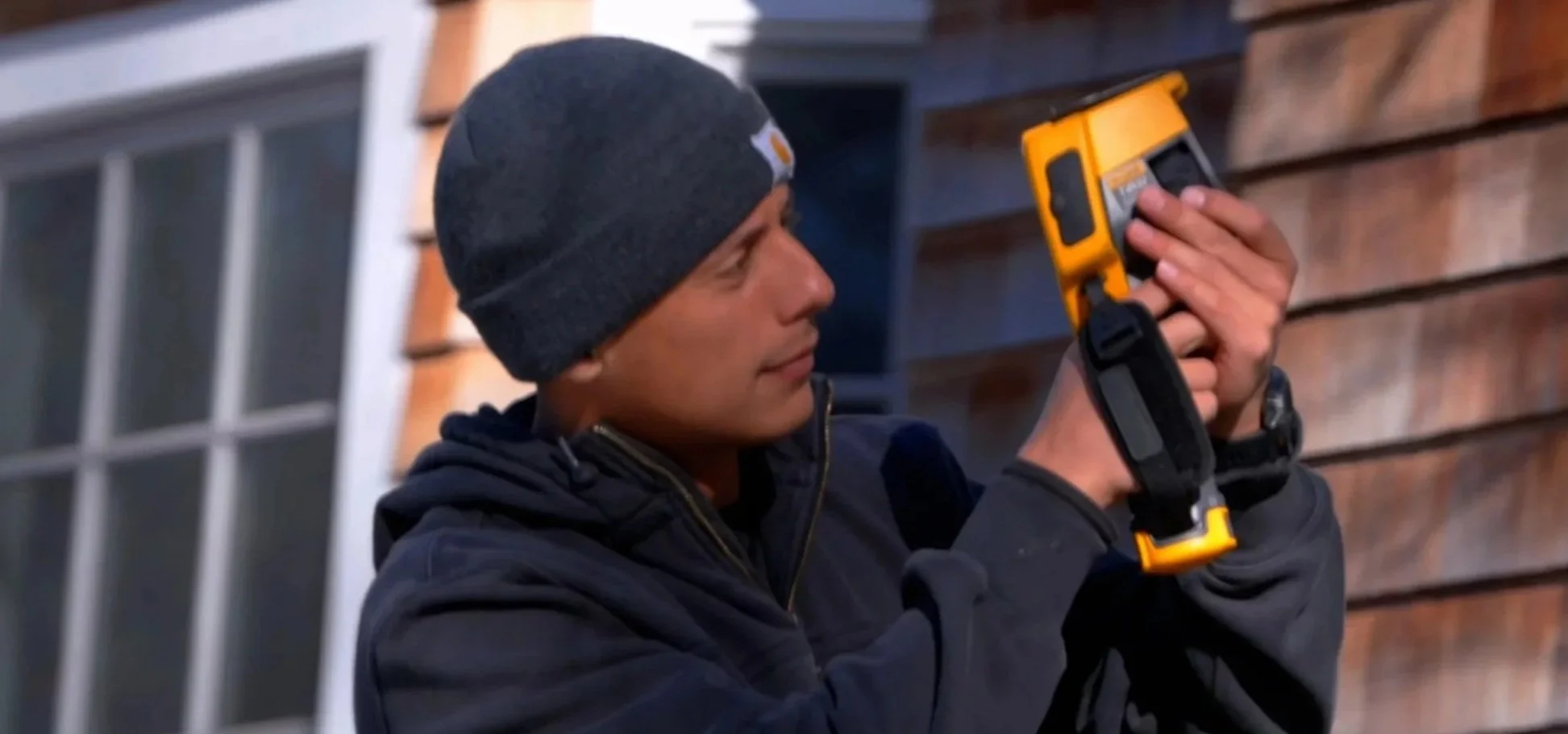
Thermal Imaging Inspections in Suffolk County, NY
Beyond what’s visible — helpful clues for moisture, insulation, and air leakage
Thermal imaging (infrared) is a non-invasive diagnostic tool that helps identify surface temperature patterns that may suggest hidden moisture, air leakage, insulation gaps, or overheating electrical components in visible/accessible areas. We use thermal imaging to guide investigation, support documentation, and help you understand what may be happening behind finished surfaces—then confirm findings in context with visual observations and measurements where appropriate.
Based in Southampton, NY, we provide thermal imaging inspections across Suffolk County, Long Island—including the East End (Hamptons + North Fork) and central/western Suffolk on both the South Shore and North Shore.
Common Patterns We See in Suffolk County Homes (Including the East End)
Thermal imaging is best at spotting patterns. Across Suffolk County, the patterns we see most are tied to air movement, humidity, and pressure differences—not just “bad insulation.” (Wind, exhaust fans, and the way warm air rises can move a lot of air through small gaps.)
Draft paths during windy weather
Cold streaks at baseboards, outlets, attic hatches, and around older trim details—especially when winds are up. Coastal storms and nor’easters can make these leaks show up quickly, but the same pathways exist throughout the county.Rim joist/band area cold lines (comfort + condensation risk)
We see this frequently in older basements and crawl spaces. That area is a common air-leak + condensation trouble spot in cold weather.Kneewall + sloped ceiling insulation voids
Cape-style layouts, dormers, and older additions often have missing/settled insulation or poorly detailed air barriers. Thermal imaging can flag the “why is this room always colder/hotter?” issue.Attic bypasses that drive ice-dam risk in winter
Warm patterns at attic hatches, plumbing penetrations, bath fan housings, and recessed lights. Air sealing + insulation strategy matters here, and it’s one of the classic reasons ice dams show up.Sweating ductwork in summer (especially when ducts run through vented attics)
In humid weather, attic air can cause condensation on ductwork. Thermal imaging helps us identify cold duct runs and “wet-looking” temperature patterns that often indicate condensation.Thermal bridging that creates cold surfaces and seasonal condensation
You’ll sometimes see a “stud map” or framing lines. That can be normal, but it can also explain cold surfaces where condensation shows up in certain seasons.
Quick note (keep expectations clean): thermal imaging doesn’t prove a leak or mold by itself. It helps us decide where to verify next.
When Thermal Imaging Is Helpful
Thermal imaging can add real value when you’re dealing with:
Suspected hidden moisture (staining, odors, recurring leaks, or prior repairs)
Building envelope questions (drafts, comfort issues, uneven temperatures)
Insulation concerns (missing, shifted, or inconsistent insulation)
Condensation patterns around windows, doors, and thermal bridges
Potential overheating electrical components observed at accessible panels or connections (visual/accessible areas only)
How a Thermal Imaging Inspection Works
Intake + history (what you’re noticing, prior leaks/repairs, areas of concern)
On-site scan of accessible areas based on scope and conditions
Targeted verification where appropriate (visual confirmation, moisture measurements, context evaluation)
Documentation with thermal images (when useful) and clear written findings
What You’ll Receive
Clear documentation of observed thermal anomalies (with images where applicable)
Plain-language explanation of what patterns may indicate
Recommended follow-up actions (additional diagnostics or repair considerations when warranted)
Optional coordination with related services if needed (moisture diagnostics, mold assessment, etc.)
What This Service Does Not Include
Thermal imaging is visual and non-invasive. It does not “see through walls,” and it does not confirm mold, active leaks, or concealed conditions by itself. We do not perform destructive testing, and we are not performing full electrical code compliance evaluations. If a thermal pattern suggests a concern, we document it and recommend the right verification or next step.
Important Notes
Thermal imaging results are influenced by conditions such as weather, HVAC operation, sun exposure, and surface materials. A thermal scan is observational and non-invasive, limited to visible and accessible areas at the time of the inspection. Concealed conditions may exist.
What We’re Looking For
Infrared cameras detect surface temperature differences. During an inspection, we may identify patterns consistent with:
Moisture-related cooling effects (possible wet materials)
Air leakage pathways or missing insulation areas
Thermal bridging and comfort-related anomalies
Localized heat signatures that warrant further evaluation
Thermal imaging supports the investigation—it does not, by itself, confirm a leak, mold, or concealed condition without correlation and verification where appropriate.
Common Related Services (When Appropriate)
Depending on what we find, we may recommend:
Moisture Intrusion Diagnostics (active leaks or recurring water entry)
Mold Assessments (suspect growth or moisture impact)
Basement & Crawlspace Assessments (humidity and moisture contributors)
Construction Consulting (repair planning, scope review, owner representation)
Casablanca Environmental & Building Diagnostics provides Thermal Imaging Inspections across Suffolk County, Long Island—including the Hamptons (South Fork), the North Fork, and central/western Suffolk.
Service Areas
East End Long Island
Bridgehampton
Riverhead
South Shore + Central Suffolk
Westhampton
East Quogue
Patchogue
Sayville
Bay Shore
North Shore
Port Jefferson
Stony Brook
Setauket
Smithtown
Mount Sinai
FAQ
What is a thermal imaging inspection?
A thermal imaging inspection uses an infrared camera to scan surfaces for temperature patterns. Those patterns can point to possible moisture, air leakage, insulation gaps, or overheating components in visible and accessible areas. It’s non-invasive and helps us decide where to look closer.
Can thermal imaging “see through walls”?
No. Thermal imaging reads surface temperatures. It can show a pattern that suggests something behind a surface, but it does not X-ray walls or floors.
Can thermal imaging confirm a leak or moisture problem?
Not by itself. Thermal imaging can show patterns consistent with moisture, but we still need to interpret it with what we see onsite and, when appropriate, moisture measurements. If you have recurring staining or an active leak, Moisture Intrusion Diagnostics may be the better next step.
Can thermal imaging confirm mold?
No. Thermal imaging cannot confirm mold. It can sometimes support a moisture investigation, and moisture is often the driver. If conditions suggest a mold concern, we may recommend a Mold Assessment and, if appropriate, targeted sampling.
Can thermal imaging help explain “this one room is always colder”?
Often, yes. We commonly find insulation voids in kneewalls and sloped ceilings, air leakage at attic hatches and penetrations, and rim-joist temperature differences that affect comfort. Thermal imaging helps narrow down where the issue is most likely coming from.
Does the weather affect thermal imaging results?
Yes. Sun exposure, outdoor temperature swings, wind, and HVAC operation can all change what the camera sees. We factor conditions into the interpretation and tell you if the day’s conditions limit what we can conclude.
Should I run heat or AC before the inspection?
A stable indoor temperature helps. If it’s winter, normal heat is fine. If it’s summer, normal AC is fine. Don’t overthink it—just tell us what the thermostat has been doing and whether windows have been open recently.
My house is seasonal and sits closed up—does that change what you look for?
Yes. Closed-up homes can trap humidity and lead to musty odor, condensation, and comfort issues. During thermal imaging inspections in the Hamptons and North Fork, we pay extra attention to common draft paths, insulation gaps, and cold surfaces where condensation tends to show up.
What will I receive after the inspection?
You’ll receive clear documentation (often photo-heavy), a summary of what the patterns suggest, and practical next steps. If the best next step is verification or a different service, we’ll tell you plainly so you’re not guessing.
Do you provide thermal imaging inspections on the East End of Long Island?
Yes. We provide thermal imaging inspections across the East End of Long Island, including the Hamptons (South Fork) and the North Fork through Riverhead—Southampton, Bridgehampton, Sag Harbor, Water Mill, East Hampton, Montauk, Riverhead, Mattituck, Cutchogue, Southold, Greenport, and nearby towns.
If you’re dealing with recurring staining, a musty odor, drafty rooms, or one area of the house that’s always colder/hotter than the rest, a thermal imaging inspection can help narrow down what’s driving it. We use infrared to spot patterns tied to moisture, air leakage, and insulation gaps, then document what we see with clear photos and practical next steps.