
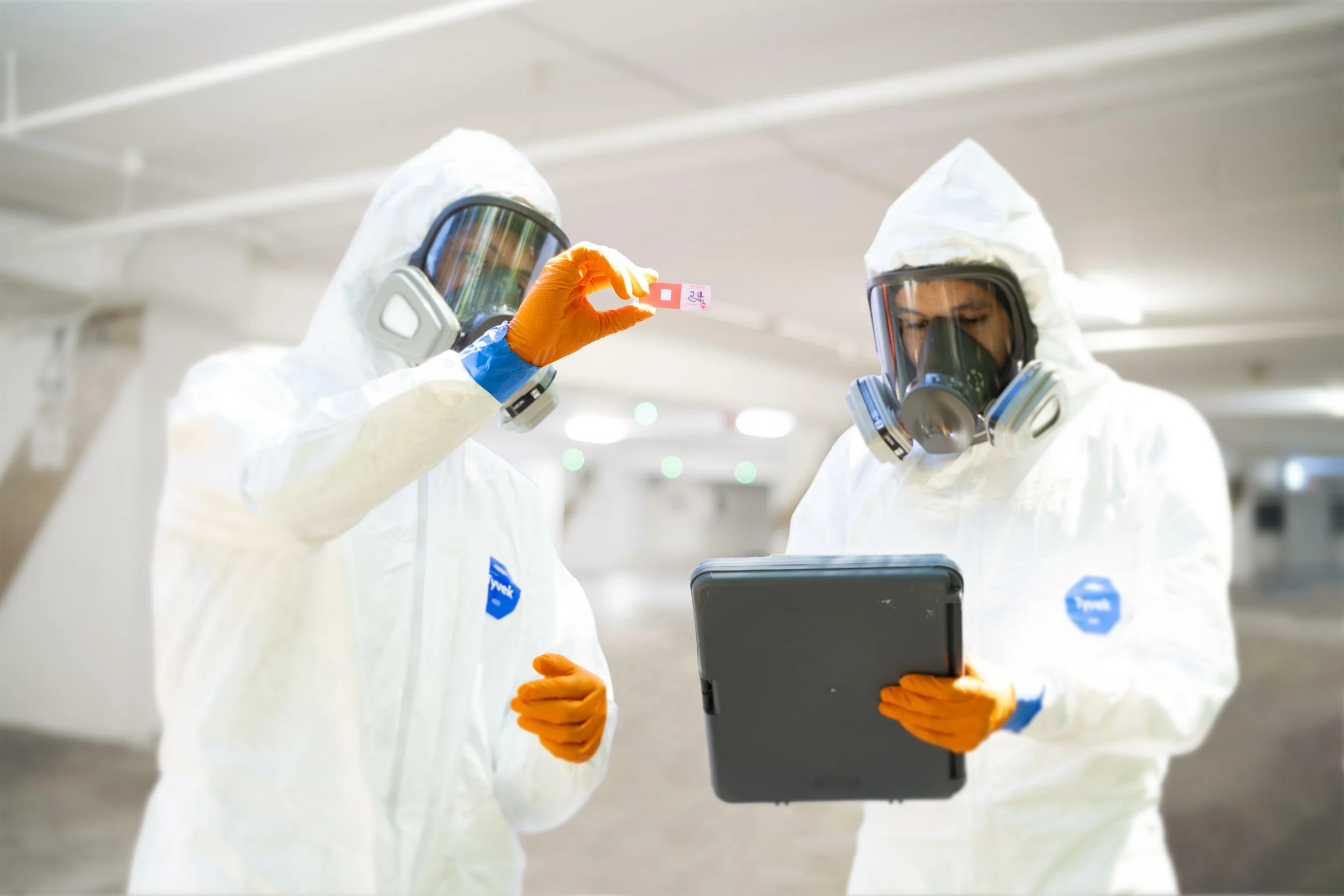
Professional Mold Assessments Suffolk County, NY
Clarity on Moisture, Mold Conditions, and Indoor Environmental Concerns
We provide NY-licensed mold assessments and mold testing across Suffolk County, Long Island — including the East End (Hamptons + North Fork) and expanding into central and western Suffolk (South Shore + North Shore). A mold assessment is a documentation-driven process that combines building history, occupant interview, and an on-site inspection to form an initial hypothesis about the origin, location, and extent of suspected microbial amplification. When appropriate, a sampling plan is developed and samples may be collected and submitted to a qualified laboratory for analysis.
When to Request a Mold Assessment
A mold assessment makes sense when you’re noticing any of the following:
Musty / moldy / mildewy odors
Visible suspect growth or staining
A recent leak, flooding, or water intrusion (or a history of it)
High indoor humidity or recurring condensation
Basement or crawlspace dampness
“We fixed it, but it came back” situations
Why mold shows up so often across Suffolk County
A lot of Suffolk County homes deal with the same moisture patterns:
Seasonal use and long periods with reduced ventilation
Coastal humidity (especially on the South Shore and East End)
Damp basements and crawlspaces
Wind-driven rain finds weak points around windows, flashing, roofs, and siding
HVAC condensation/ductwork issues, especially in attics and mechanical spaces
“We fixed it, but it came back” situations caused by an unresolved moisture driver
Mold is usually a moisture problem first. The goal is to document the conditions and find the driver — not just chase numbers.
Our Approach
This is the process we follow (simple, documented, and practical):
1) Building history + quick interview
We start with what’s been happening: leaks, repairs, humidity patterns, ventilation, timing of odors, and where you’ve seen staining. That tells us where to focus first.
2) On-site inspection + moisture investigation
We inspect visible and accessible areas and use direct-read tools to check moisture conditions in materials and the indoor environment.
3) Thermal imaging (when it helps)
Thermal imaging can help identify temperature patterns that may point to hidden moisture. It’s a tool we use to guide investigation—then we verify what we’re seeing.
4) Sampling strategy (when appropriate)
Sampling isn’t automatic. If sampling will answer a real question, we build a simple plan and document it (including chain-of-custody).
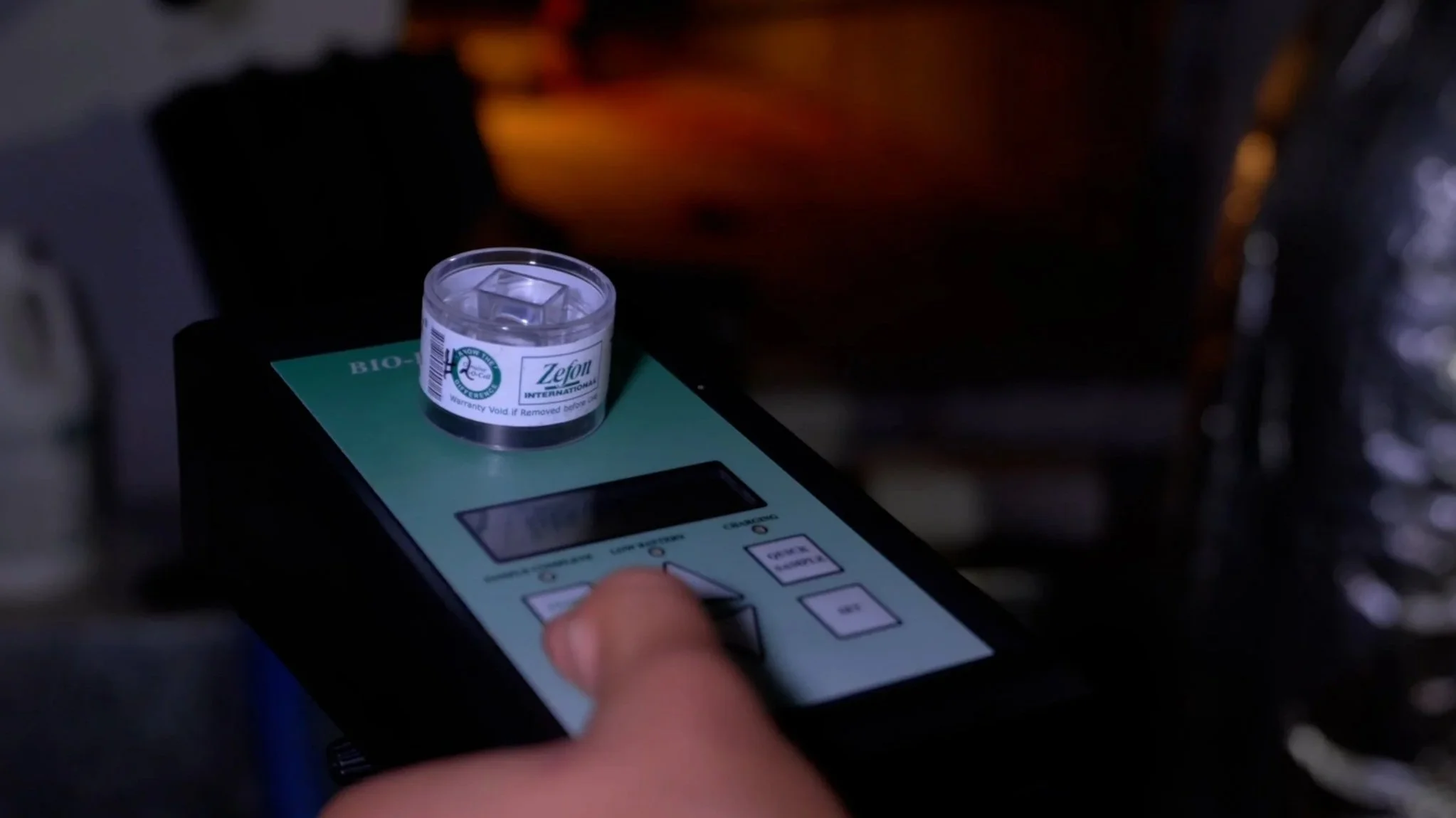
Sampling Methods
Air Sampling (Spore Trap)
Used to compare an area of concern to an appropriate baseline/control and to evaluate whether airborne fungal indicators are elevated.
Surface Sampling (Swab / Tape Lift)
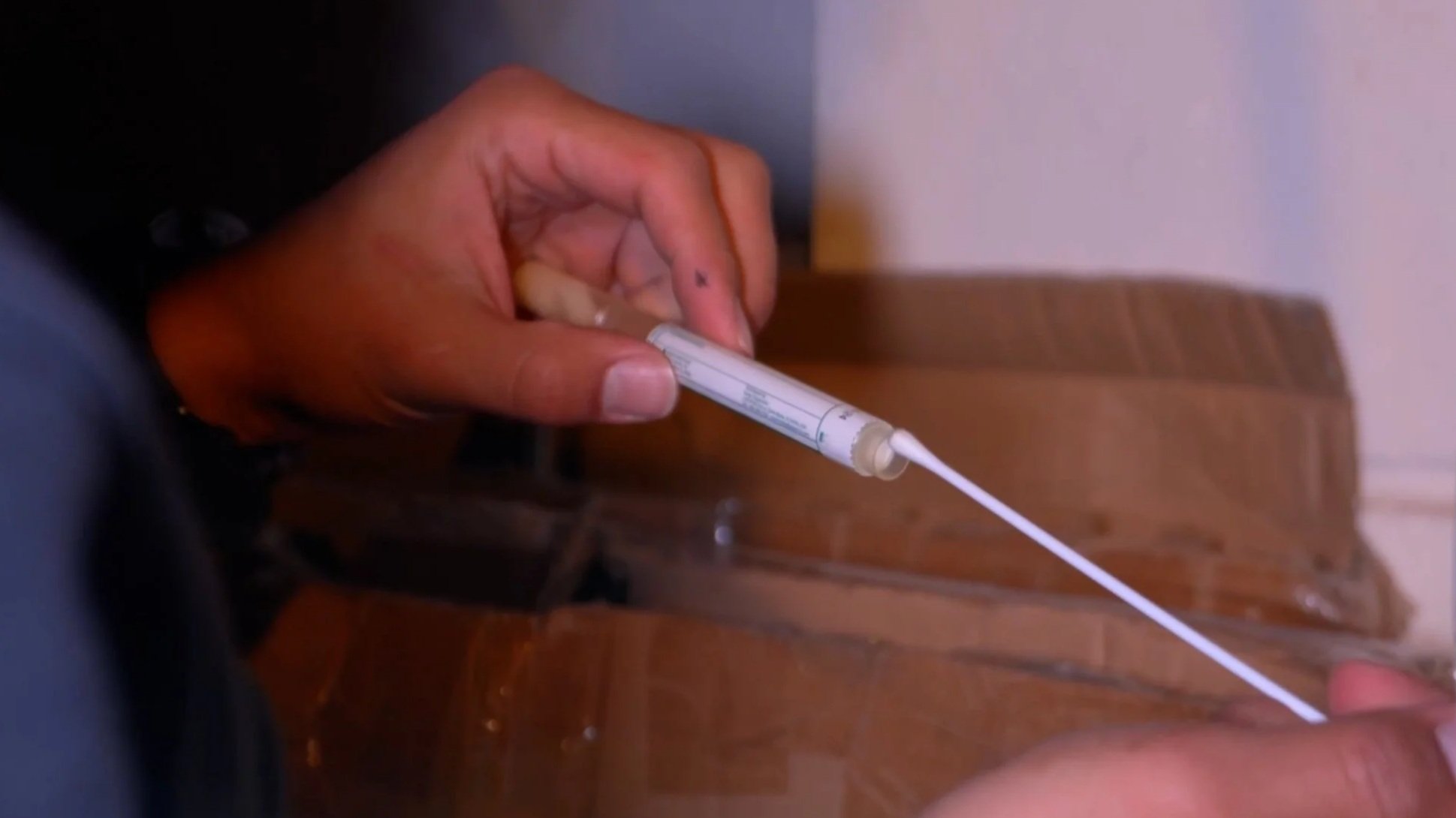
Used when visible suspect growth is present to help identify what’s on a surface and guide next steps.
Bulk Sampling (Material Sample)
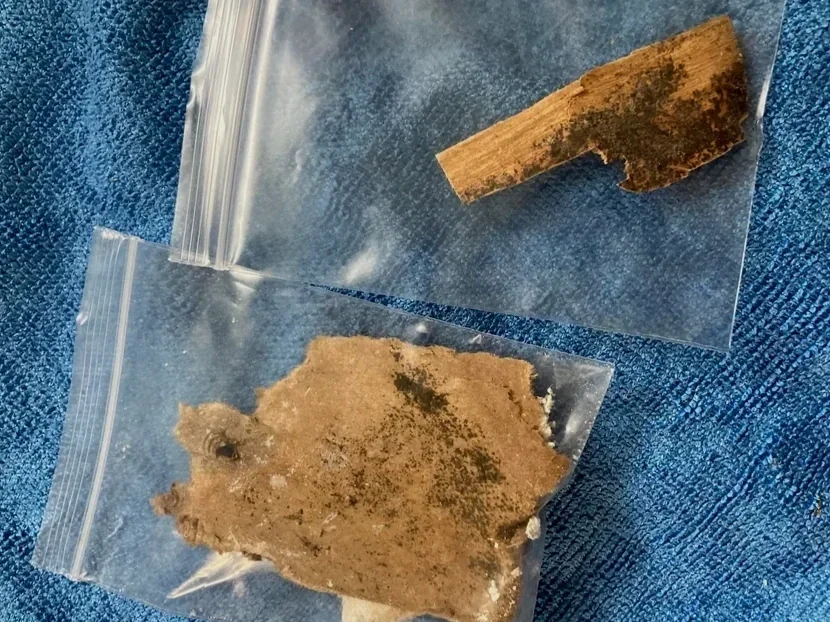
Used when a small piece of affected material is needed for lab identification (for example: drywall, insulation, carpet backing). Bulk sampling is typically reserved for specific scenarios where it helps answer a defined question.
Lab work: testing is performed by qualified third-party laboratories.
How Lab Results Are Interpreted
There is no government-established permissible exposure limit (PEL) for mold, so results aren’t labeled “safe” or “unsafe.” We interpret findings by comparing to an appropriate baseline/control and matching the data to what we observed onsite.
We use the IICRC S520 framework to describe conditions in plain terms:
Condition 1: normal background fungal ecology
Condition 2: settled spores / moderate contamination (often spread from a source area)
Condition 3: actual growth or substantial contamination (visible or hidden)
Deliverables
You’ll receive clear documentation that typically includes:
A straight, executive-style summary
On-site observations and moisture-related findings
Sampling results (if collected) and a plain-English summary
Practical recommendations (and remediation guidance when applicable)
Post-Remediation / Post-Repair Verification
After remediation or repairs, we can perform a follow-up evaluation to document current conditions and confirm the work aligns with the plan. Where appropriate, verification can include air monitoring to see whether conditions have returned toward normal background levels (Condition 1).
Standards & Guidance Referenced
Our language and framework align with commonly referenced guidance, including:
NYS Labor Law Article 32 (licensing and work standards)
IICRC S520
US EPA mold guidance
NYC DOH guidance
AIHA / ACGIH guidance
Important Notes
Observations relate to visible and accessible conditions at the time of the visit.
Results are time-specific.
We do not provide medical advice.
We are independent diagnostics—we do not perform remediation.
Schedule a Mold Assessment
Text/call 631-655-9855 or email bayrona@casablancaebd.com. Include 3 quick details and we’ll recommend the right scope:
What you noticed (odor / staining / leak)
Where it is (basement, crawlspace, bedroom, attic, etc.)
When it started (and if there was a known water event)
FAQ
Do you offer “mold testing,” or a mold assessment?
We provide mold assessments across Suffolk County, Long Island. Testing (air and/or surface sampling) may be included when it answers a specific question. The goal is to document conditions — especially moisture — so the problem gets solved correctly, not just labeled.
What’s the difference between a mold assessment and mold remediation?
A mold assessment is the inspection, documentation, and (when appropriate) sampling used to understand conditions and likely moisture contributors. Mold remediation is the physical containment, removal, and cleaning work performed by a remediation contractor.
In New York, the same licensee is prohibited from performing both mold assessment and mold remediation on the same property — the separation is designed to prevent conflicts of interest.
What’s the difference between a mold assessment and mold remediation?
There’s no single government “safe/unsafe” cutoff for mold results, and we don’t provide medical advice. What we can do is determine whether conditions appear typical (background) or abnormal (elevated / consistent with a source) based on what we observe onsite, building history (leaks, humidity, ventilation), and—when sampling is performed—comparison to an appropriate baseline/control.
authoritative pages:
Do you use thermal imaging during a mold assessment?
Sometimes. Thermal imaging can help point to patterns that may suggest hidden moisture or building envelope issues. But infrared alone doesn’t prove a leak or mold. If we see a pattern, we interpret it in context and verify where it makes sense.
How long does a mold assessment take?
It depends on the home size and the scope (one area of concern vs. wider review). After a quick intake (what you noticed, where, when it started), we’ll recommend the right scope and give you a realistic time expectation before scheduling.
What should I do before the appointment?
If you can, share any background: known leaks, recent storms, past repairs/remediation, where odors show up, and where staining is visible. Try not to do heavy cleaning of suspect areas right before the visit—documentation is easier when conditions are undisturbed.
Do you perform post-remediation verification?
Yes. After remediation or repairs, we can perform post-remediation / post-repair verification to document current conditions and confirm the work matches the intended plan. When appropriate, that can include follow-up measurements or air monitoring.
What areas do you serve in Suffolk County?
We serve Suffolk County, Long Island — including the Hamptons and North Fork, plus central and western Suffolk on both the South Shore and North Shore. For a full town list, see: /service-areas-suffolk-county-long-island
Should I get a mold assessment if I only smell a musty odor?
Yes, especially in seasonal homes. A musty odor often points to moisture conditions in basements, crawlspaces, wall cavities, or HVAC areas. The goal is to identify the moisture driver and document where conditions are strongest so you’re not guessing.
Can you help during a real estate transaction?
Yes. We work with buyers, sellers, and agents across the East End. If you have a closing date, share the deadline and we’ll recommend the fastest scope that still gives you useful documentation.
Casablanca Environmental & Building Diagnostics provides mold assessments and mold testing across Suffolk County, Long Island — including the Hamptons and North Fork, plus central and western Suffolk on both the South Shore and North Shore.
Service Areas
East End Long Island
Bridgehampton
Riverhead
South Shore + Central Suffolk
Westhampton
East Quogue
Patchogue
Sayville
Bay Shore
North Shore
Port Jefferson
Stony Brook
Setauket
Smithtown
Mount Sinai
Also Serving
Ronkonkoma
Commack
Kings Park
Halesite
Selden
Yaphank
Mattituck
Wyandanch