
Southampton, NY Indoor Air Quality Testing

How an IAQ Assessment Works
Every assessment follows the same five steps. What changes from home to home is the scope, which is set by the concern.
Scope from the first conversation. We ask what you are noticing, where and when, who is affected, what has changed in the home recently, and how the home is used through the year. That conversation sets the scope, and it tells us whether laboratory sampling is likely to be needed.
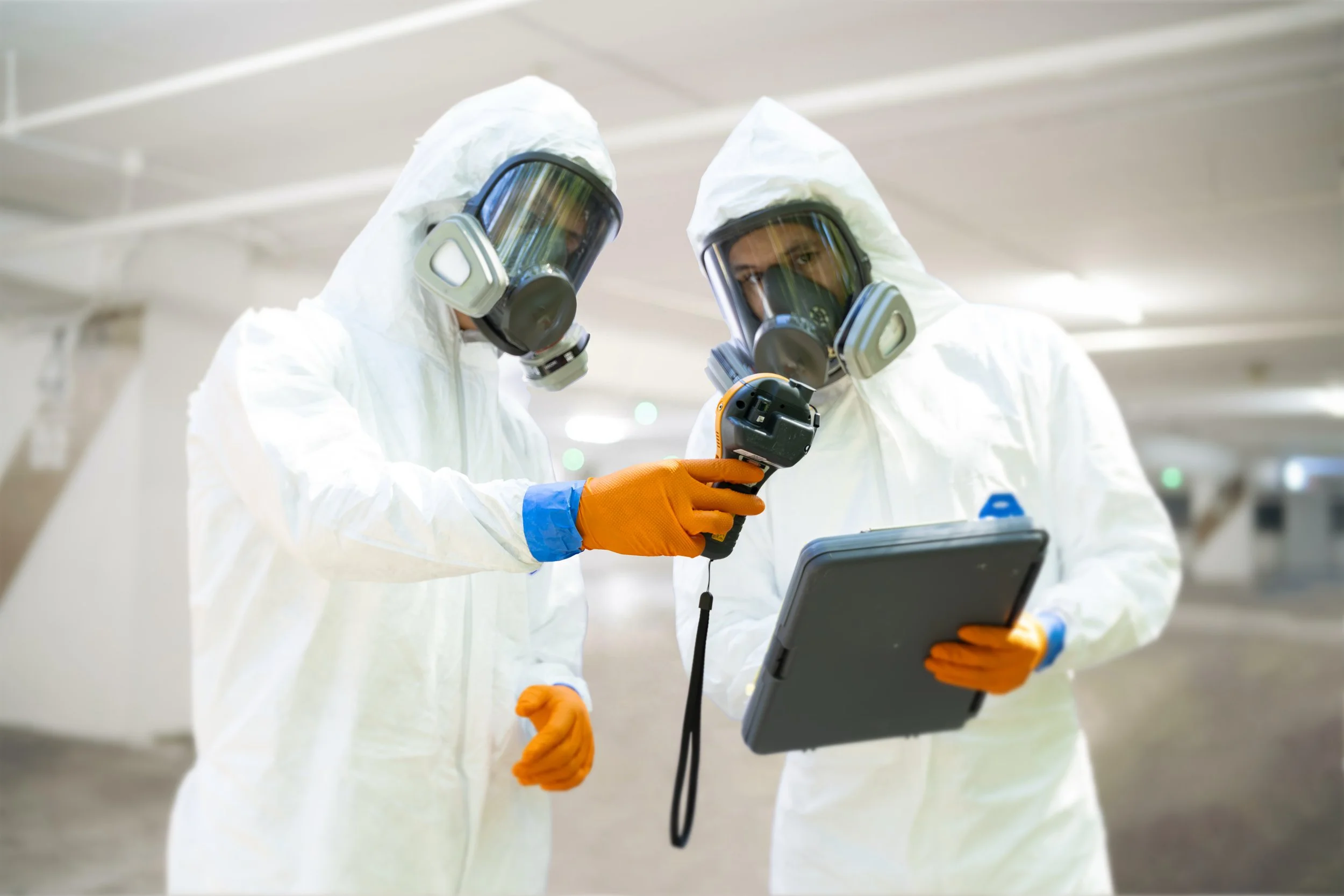
A whole-home walkthrough. Every level, interior and exterior, with thermal imaging. We inspect the heating, cooling, and ventilation equipment, filters, and accessible ductwork, the bath and kitchen exhaust, the fireplaces and combustion appliances and their venting, and the connection between an attached garage and the living space, and we look for moisture and visible mold throughout.
Room-by-room readings. Direct-read measurements in every room and outdoors with a TSI Q-Trak XP 7585, so each room can be compared with the outdoor air and with the rest of the home. In homes with several heating and cooling zones, readings are taken in each zone.
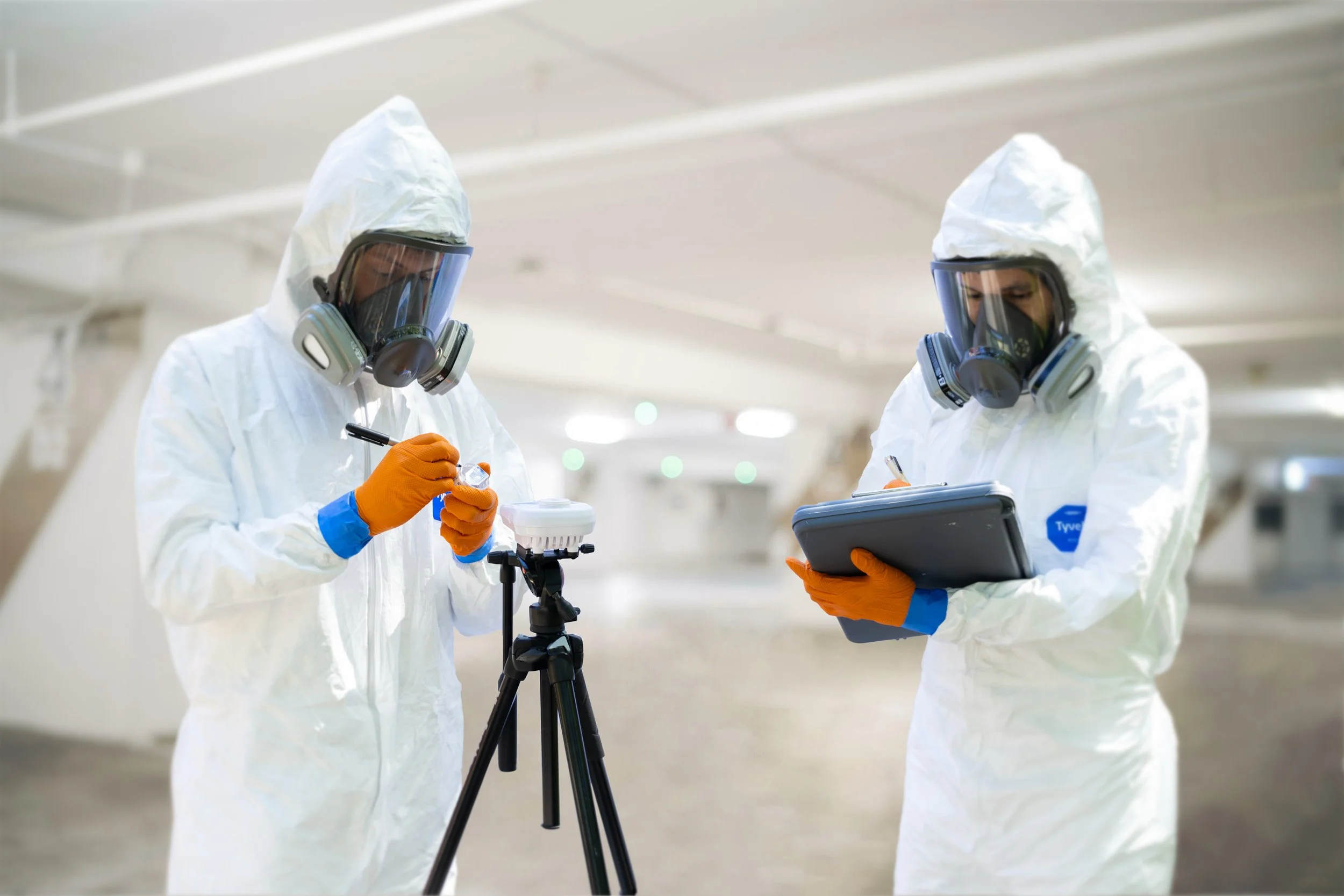
Laboratory sampling when it answers the question. If the readings or the concern call for it, we collect samples for an accredited third-party laboratory. The options are listed below.
A written report. Findings, readings, laboratory results, photographs, and recommendations ranked by priority.
What the Readings Tell Us
Each room is measured and compared with outdoor readings taken during the same visit. For carbon dioxide, carbon monoxide, and particulates, the difference between indoor and outdoor is often more useful than the indoor number alone.
Temperature, relative humidity, and dew point
How much moisture the indoor air holds. EPA recommends keeping indoor relative humidity below 60%, ideally between 30% and 50%. Dew point is the temperature at which moisture in the air condenses, and surfaces colder than the dew point collect condensation: ductwork and air handlers in attics during the cooling season, cold windows, and surfaces in basements and crawl spaces. We compare the dew point with surface temperatures from the thermal camera to find them.
Carbon dioxide
An indicator of how much outdoor air a room receives for the number of people in it. Levels that rise well above the outdoor level in an occupied room with the doors closed indicate that the room is not receiving enough outdoor air. Carbon dioxide is not a measure of overall air quality on its own.
Total VOCs and formaldehyde
Screening readings that help identify which rooms and materials to look at: new cabinetry and millwork, flooring and adhesives, paint and finishes, spray foam, stored chemicals. These direct-read sensors are screening instruments, not laboratory measurements. The VOC sensor responds to many compounds at once and cannot tell them apart, and the formaldehyde sensor is not accurate enough at the low levels that health-based guidelines address. When a number needs to be confirmed or a compound identified, we use laboratory sampling.

Carbon monoxide
A product of combustion. Indoor readings are compared with the outdoor level. A reading clearly above it indicates a source or a path from one, and we check the fireplaces, gas appliances, boilers, water heaters, generators, and attached garage.

Particulates (PM1, PM2.5, PM10)
Fine and coarse particles from cooking, candles, fireplaces, construction dust, and outdoor smoke. On June 7, 2023, during the Canadian wildfire smoke event, the state's air monitor at Holtsville in Suffolk County recorded a 24-hour average PM2.5 level of 118.8 micrograms per cubic meter. Indoor readings compared with outdoor ones indicate how well the home keeps outdoor particles out and whether the filtration is reducing them.

Surface temperatures and moisture in materials
Thermal imaging shows differences in surface temperature, which can indicate a damp wall or ceiling, a cold duct, or missing insulation. A moisture meter then confirms whether a suspect area is actually wet. This connects the humidity and dew point readings to specific surfaces in the home.
Laboratory Sampling Options
Laboratory analysis is added to the scope when the question calls for it, and it is itemized separately from the assessment.

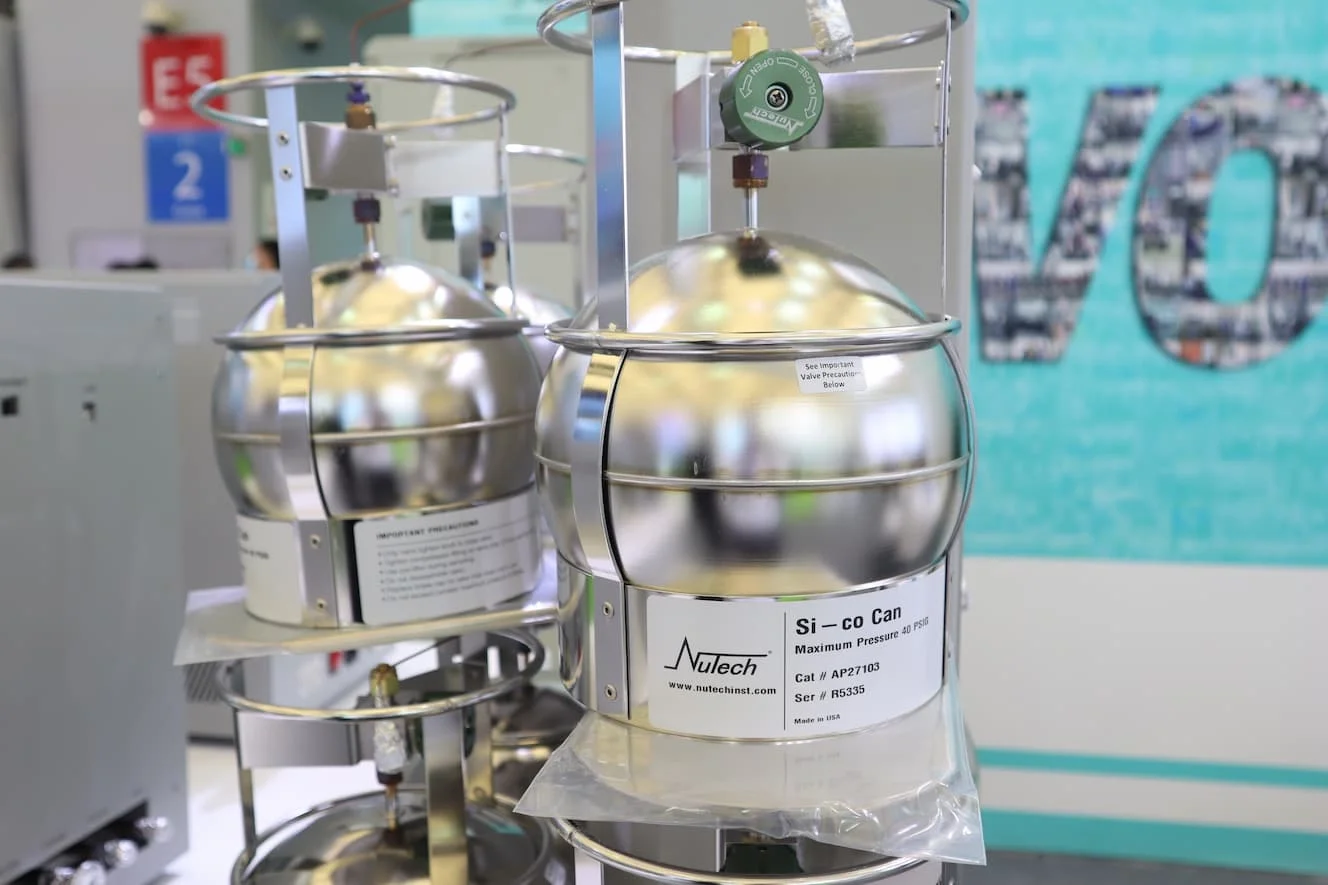
VOCs by Summa canister (EPA Method TO-15)
Identifies and measures individual volatile organic compounds, 74 on the standard list, instead of a single total. Standard turnaround is about one week.

Formaldehyde by passive badge
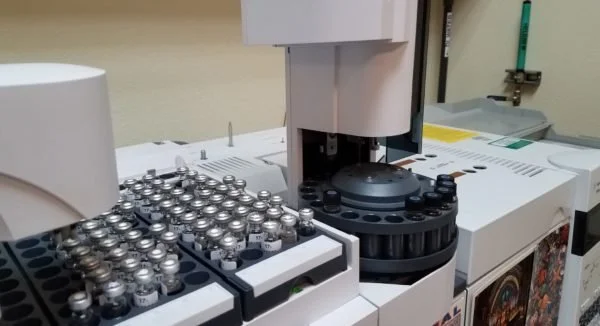
A time-weighted sample, usually left in place for 24 hours in the room of concern and then analyzed by the laboratory. A longer sample gives the laboratory a lower detection limit.

Mold spore traps
Collected when moisture or mold is part of the concern, and compared with outdoor controls.

Indoor allergens
Dust mite, pet, cockroach, and rodent allergens.

Bacteria
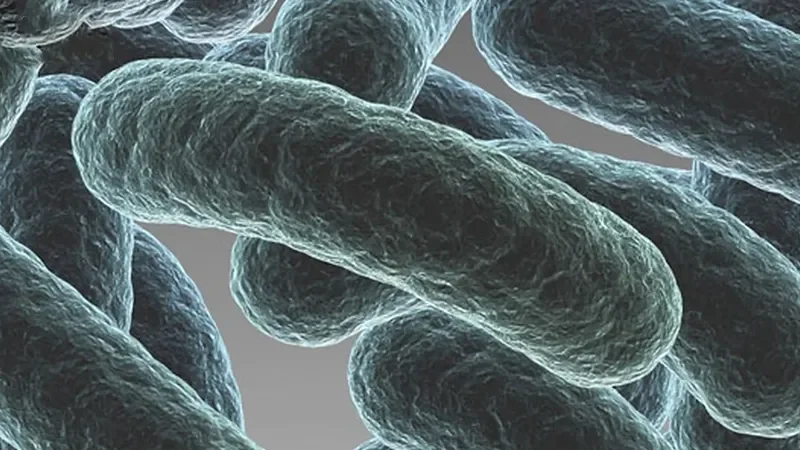
Coliforms, E. coli, and Enterococcus, sampled after a sewage backup or overflow.

Soot, char, and ash
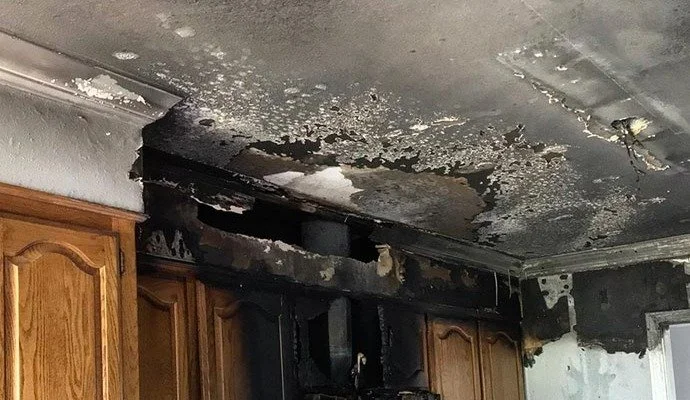
Surface samples collected by tape lift, wipe, or micro-vacuum and examined by the laboratory for soot, char, and ash, compared with samples from unaffected rooms. Used after wildfire smoke, a fire in the home, a fireplace or chimney problem, or an oil burner puffback, to show where residue reached and to document it for cleaning and insurance claims.

Why Southampton Homeowners Call Us
New construction and renovations
A new home or a major renovation brings in cabinetry, millwork, flooring, adhesives, paint, and often spray foam insulation, all of which can release volatile organic compounds. Composite wood carries a federal formaldehyde label under TSCA Title VI, but the label means the product met an emission limit in a laboratory chamber test; it is not a measurement of the room. Emissions increase with temperature and, to a lesser degree, humidity, so a new home closed up through warm weather tends to have higher levels. Tight homes depend on mechanical ventilation, and in a study of 70 new California homes built under a mechanical ventilation code, the required fans were running in only 26% of homes when researchers first visited. Spray foam insulation odor on the East End · Low-VOC paint and off-gassing
Before the season or a summer rental
A pre-arrival check before owners or tenants move in: humidity, ventilation, particulates, and a moisture walkthrough of a home that has been closed.
Humidity, condensation, and musty odors
Condensation on windows or ducts, a musty odor with no visible source, or a dehumidifier that runs constantly each indicates a moisture problem, and the walkthrough and dew point readings are how we find the cause.
Combustion and carbon monoxide
Since February 22, 2010, New York's Amanda's Law has required carbon monoxide alarms in one- and two-family homes with fuel-burning appliances or an attached garage. An alarm sounds only after levels are already high. The assessment looks at the venting, the draft, and the paths from the garage and mechanical rooms into the living space.
Pool chemicals and equipment rooms
EPA warns that common pool chemicals are incompatible with each other and that mixing them can release chlorine gas, and CDC recommends keeping them in a cool, well-ventilated area with incompatible chemicals, such as acid and chlorine, stored apart. In many Southampton homes the pool chemicals are stored in a basement or mechanical room that shares air with the living space, and we look at that storage as part of the assessment.
Symptoms that ease away from the home
Headaches, irritation, or congestion that improve when you leave. We do not diagnose health conditions; we measure what is in the air and where it comes from, so you and your physician have data to work with.
Sewer and septic odors
Odors from floor drains, dry traps, or septic venting, and bacterial sampling after a sewage backup.
How Results Are Read and Reported
Each reading is compared with outdoor readings taken during the same visit and with the published guideline that applies to it: EPA humidity guidance; health-based guidelines from EPA, the World Health Organization, and the New York State Department of Health where they exist; NIOSH occupational limits for reference only; and, for ventilation rates, ASHRAE Standard 62.2, Ventilation and Acceptable Indoor Air Quality in Residential Buildings. Direct-read VOC and formaldehyde screening readings are not compared against health-based guidelines; laboratory results are. The report states which guideline each number is compared against, and where no guideline exists, it says so.
The report contains:
An executive summary written for the homeowner.
A room-by-room readings table beside the outdoor readings.
The full laboratory reports, with a plain-English interpretation.
Photographs and thermal images of what we found.
Recommendations ranked by priority.
Independent Recommendations
We sell no equipment and take no referral fees, so the recommendations are based only on what we measure and find:
Source control first. Remove or seal the source, correct the moisture, and fix the venting.
Ventilation second. A whole-home ventilation system that is commissioned and actually running.
Humidity control. Dehumidification sized to the home, with relative humidity kept below 60%.
Filtration last. EPA recommends at least a MERV 13 filter in the central system where the equipment can take it, and a portable HEPA air cleaner sized to the room reduces smoke and pollen particles in that room.
No ozone generators. EPA states that no agency of the federal government has approved ozone generators for use in occupied spaces, and that ozone at levels that meet public health standards does not effectively remove biological pollutants.
Duct cleaning only when warranted. EPA says to consider it only when there is substantial visible mold growth inside hard-surface ducts, vermin, or dust and debris actually released from the supply registers, and does not recommend routine cleaning.
IAQ Assessment or Mold Testing?
Both services use the same instruments, and each covers part of the other. The difference is the question being asked.
Book an IAQ assessment when the concern is the air in the home as a whole: odors after a renovation, symptoms, stuffiness, humidity, combustion, smoke, or a pre-arrival check. It includes a visual check for moisture and mold, and spore traps can be added.
Book mold testing when the concern is mold: visible growth, a musty odor, a leak, or a real estate transaction. Every mold assessment also records Q-Trak readings at each sampling location, and when remediation is needed, it produces the mold remediation plan, including clearance criteria, that New York law requires before remediation of more than 10 square feet begins.
Before the Visit
Keep the home in its normal condition. Do not air it out, run extra fans, clean more than usual, use air fresheners, or paint in the days before the assessment. Have HVAC service records and details of any recent renovation, insulation, flooring, or cabinetry work available. The length of the visit depends on the size of the home and the scope, and formaldehyde badges are usually left in place for 24 hours.
Areas We Serve Around Southampton
From our Main Street office we cover the Village of Southampton and the surrounding hamlets and villages:
Village of Southampton
Shinnecock Hills
Tuckahoe
North Sea
Noyac
Water Mill
Bridgehampton
Sagaponack
Southampton Indoor Air Quality FAQ
Is laboratory testing included in an IAQ assessment?
The assessment itself is a whole-home, instrument-based evaluation with a written report. Laboratory sampling is added when the concern or the readings call for it, such as VOC identification, formaldehyde, spore traps, allergens, bacteria, or soot and smoke residue, and it is itemized separately.
Should we test a new home for formaldehyde?
Often, yes, particularly before moving in or after a new home has been closed through warm weather. Formaldehyde, which composite wood products release, has established health-based guidelines for indoor air, and the corrections, usually ventilation and humidity control, are easier to make before the home is occupied.
Can you check the home before we arrive for the season?
Yes. A pre-arrival check covers humidity, ventilation, particulates, and a moisture walkthrough, and we can meet a caretaker or property manager for access.
Do you test for radon, asbestos, or lead?
Not as part of a standard IAQ assessment. Ask when you book and we will advise on testing for those. Suffolk County is in EPA Radon Zone 3, the lowest predicted radon potential, and EPA recommends testing every home for radon regardless of zone.
Will an air purifier fix the problem?
A portable HEPA air cleaner removes particles from the room it is in. It does not remove gases such as VOCs and formaldehyde, and it does not correct a moisture or ventilation problem. The assessment identifies the source so the fix addresses it directly.
How long do laboratory results take?
Spore trap results typically arrive within one to three business days, depending on the turnaround requested. Allergen and bacteria panels take one to two weeks, and a standard VOC canister analysis takes about one week.
Schedule an Indoor Air Quality Assessment in Southampton
Call or text (631) 655-9855 Email bayrona@casablancaebd.com Office: 30 Main Street, Southampton, NY 11968