
A building can look spotless and still hide a failing roof. A commercial property inspection shows you the roof age, the mechanical condition, and the water history before you commit. Buyers and owners across the Hamptons and North Fork can book a commercial building inspection to get that picture early.
This guide covers what inspectors check and what they skip. It also covers East End problems that national guides ignore. Read it before your due diligence clock starts.
What Is a Commercial Property Inspection and Who Needs One?
It is a visual and non-invasive review of a building's roof and structure and major systems. Buyers, tenants, lenders, and owners order one to learn what repairs are coming. The inspector documents what a trained eye can see and reach on the day of the visit. That is enough to flag a leaking roof or an aging furnace or a rotted stair rail. It will not test every wire or pipe.
People usually order a commercial inspection for four reasons:
A purchase offer on an office, retail, or mixed use building
A lease where the tenant pays for repairs
A refinance where the lender wants condition data
A tenant fit out that needs a baseline
The lease case surprises people. Under a triple net lease, the tenant often carries roof and HVAC costs. Knowing the age of that equipment before signing is plain self defense. So how does this differ from the inspection a homebuyer gets? The next section answers that.
Commercial Building Inspection vs Residential Inspection
Residential and commercial inspections differ in scope and focus. The table below highlights the key differences between evaluating a home and inspecting a commercial property.
| Inspection Factor | Residential Inspection | Commercial Building Inspection |
|---|---|---|
| Primary Purpose | Protects the homebuyer and family | Protects the investment and business operations |
| Main Concerns | Kitchens and bathrooms and general living conditions | Building systems and operating costs and financial risks |
| HVAC Systems | Typically examines a residential furnace or air conditioner | May assess rooftop HVAC units and complex mechanical systems |
| Inspection Scope | Follows residential inspection standards and agreed services | Follows the agreed scope of work and may use ComSOP standards |
| Property Areas | Focuses on the home and its major systems | Includes parking areas and site drainage and shared building systems |
| Cost Considerations | Often involves a smaller and simpler property | May require specialized equipment and additional access arrangements |
| Mixed Use Buildings | Examines residential living areas | May assess commercial spaces and shared systems alongside residential areas |
For mixed use properties with apartments above retail spaces, our pre-purchase home inspection service can help assess residential areas.
Now let's look at what actually gets checked.
What a Commercial Inspector Checks Inside and Out
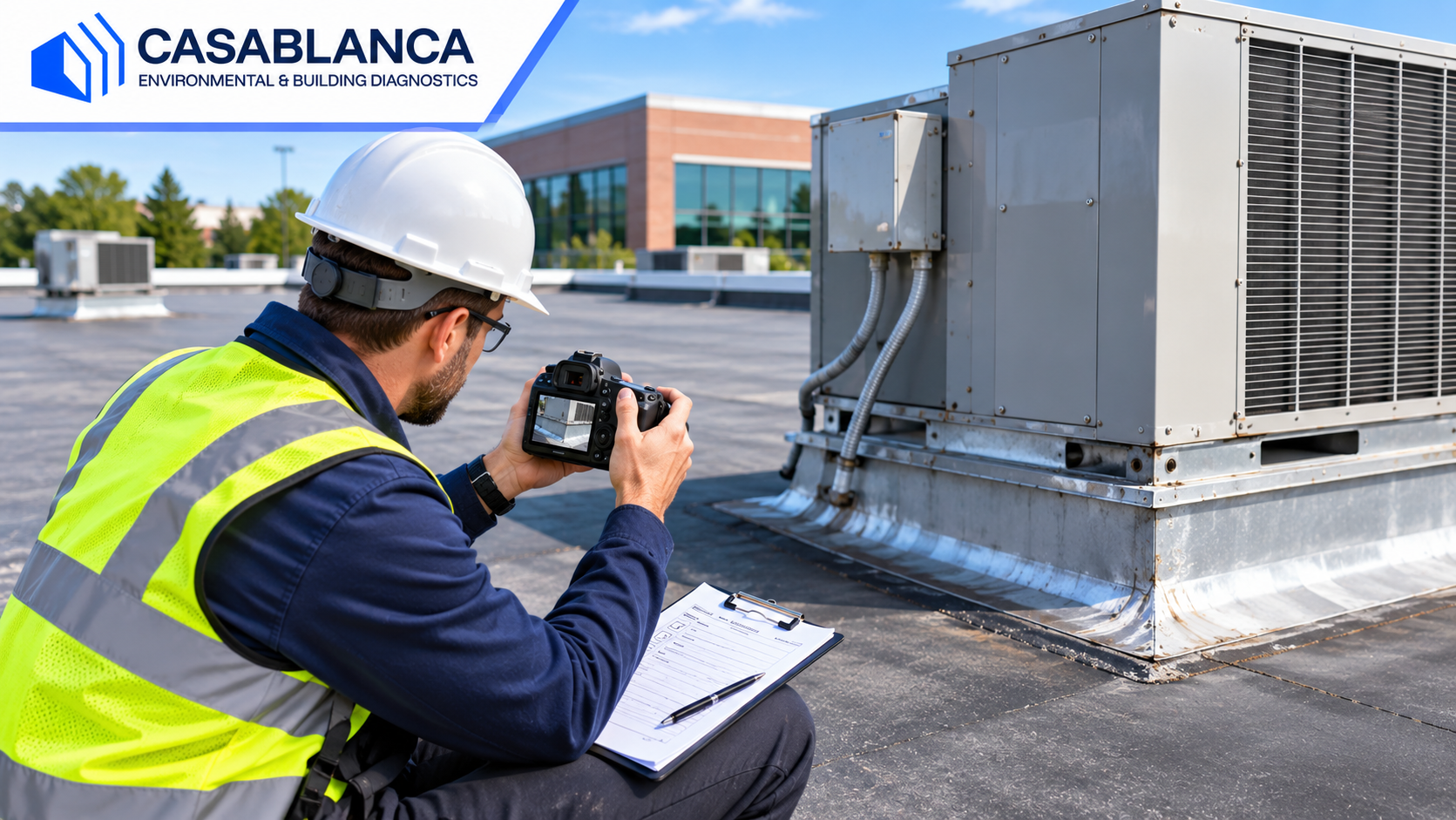
A commercial inspector reviews the roof, exterior, interior, structure, and mechanical systems. Each area gets photos and a priority rating.
Here is the usual coverage:
Roof and drainage: surface and flashings, ponding, and TPO roof membranes on flat roofs
Exterior envelope: masonry and sealants and doors and signs of water entry
Structure: visible framing and cracking and past repairs
Mechanical rooms: boilers and water heaters and rooftop equipment
Electrical and plumbing: visible panels and wiring and fixtures and leaks
Site: parking surfaces and walks and drainage
Look at the mechanical rooms first. Trash, grime and tangled hoses usually mean skipped maintenance. A freshly painted room can hide problems too, so the inspector tests what is accessible.
Tip 1: Ask the seller for roof warranties and service records before the walkthrough. The inspector can then compare the paper trail to the real condition.
Not every question fits a visual inspection, though. Some need a deeper report.
Property Condition Assessment and Phase I: Where the Inspection Ends
A property condition assessment goes deeper than a standard inspection and projects repair costs over ten years or more. It often follows the ASTM E2018 framework. Lenders often ask for one on multifamily and industrial deals. A standard inspection lists what is wrong today. The assessment prices what will wear out next. Your capital expenditure budget depends on that second view.
Environmental risk sits outside both. A Phase I Environmental Site Assessment reviews records and site history for signs of contamination. The EPA's All Appropriate Inquiries page explains the process buyers follow to protect themselves from liability. An environmental professional performs that work and not a building inspector. Order it early because records research takes time. Ask that petroleum products sit inside the scope.
Paperwork and equipment cover the building. Next come the people who use it.
Life Safety and ADA Access Issues Buyers Miss
Life safety items protect people and shield you from injury claims. Inspectors note blocked exits, weak handrails, and missing signage, but they do not certify code compliance.
Look for emergency exit signage and lit pathways and fire separation doors that close fully. Trip hazards in the parking lot count too.
Accessibility is the quiet liability. The ADA asks businesses open to the public to remove barriers when that is readily achievable. The Justice Department small business primer lists accessible parking, entrance ramps, and door hardware as typical fixes.
Offices and warehouses with no public access face a lighter duty for existing buildings. Retail and restaurants face the stricter one. Know which category you buy before you price repairs.
Tip 2: Walk from the parking lot to the front door as a customer would. Any step or steep slope you notice is a future line item.
These national rules apply everywhere. The East End adds its own twists.
East End Long Island Risks Most Commercial Guides Skip
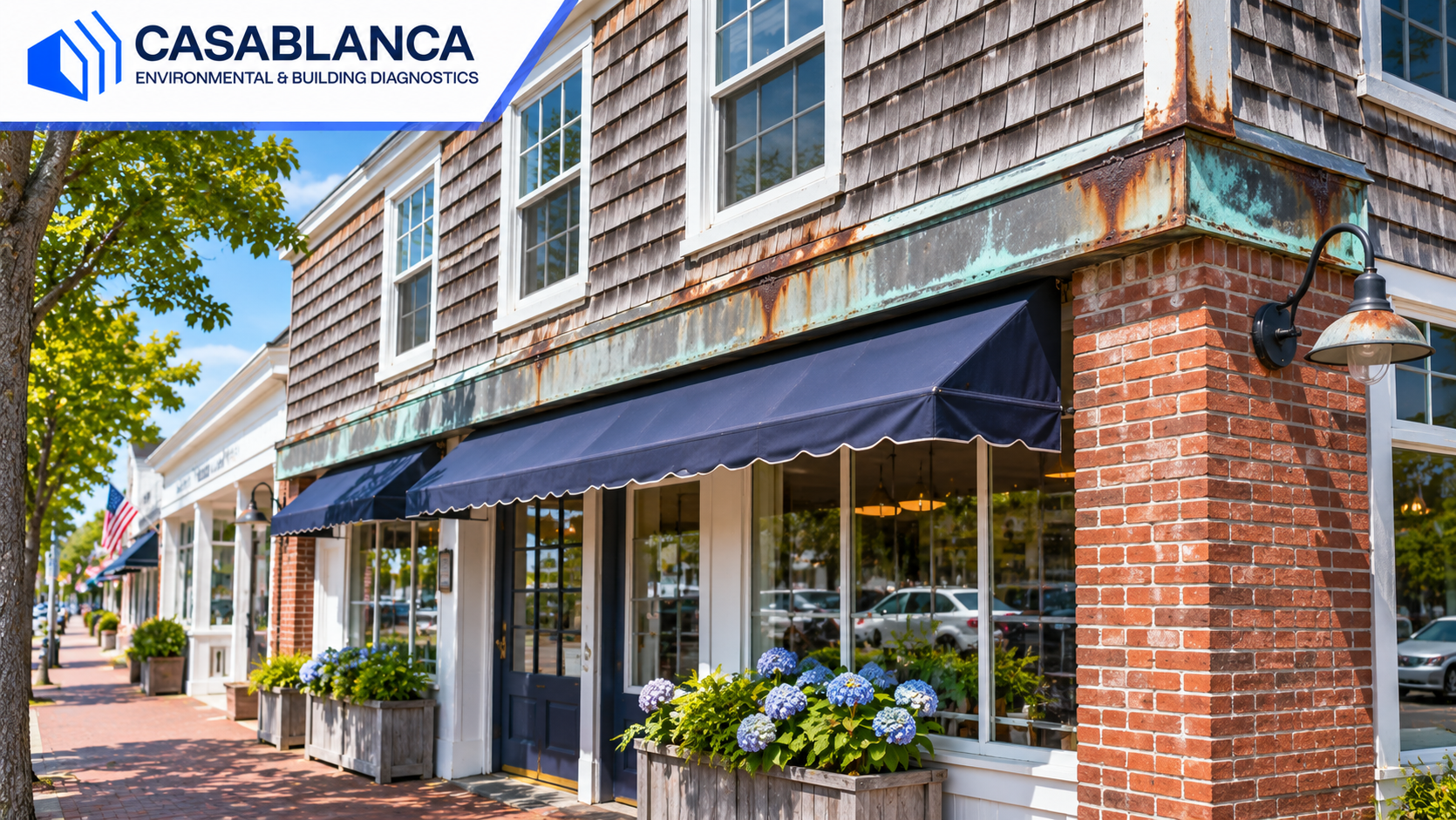
East End buildings face salt air and flood exposure and septic limits that inland guides never mention. Each one changes repair costs and permit timelines.
Salt air
Coastal weather corrodes flashings and metal roof edges and rooftop units faster than inland weather. One nor'easter can turn a small drainage flaw into an interior leak. A commercial property inspection here should treat roof edges as a priority.
Septic rules
Many commercial lots have no sewer. Suffolk County now requires nitrogen reducing septic systems for new commercial construction in unsewered areas. A change of use or major expansion can trigger the same upgrade. Towns such as East Hampton add their own rules on top of county law. Ask early because this can reshape a budget.
Buried fuel tanks
Older buildings may hide them. Suffolk County's Article 12 sets storage standards that include secondary containment and leak detection. Ask the seller for tank registration and closure records.
Flood zones
Waterfront parcels in harbor villages may sit in mapped flood zones. Check the FEMA flood map before you check the paint.
Records
Southampton, East Hampton, Southold and Riverhead, and Shelter Island each keep their own building permits and certificate of occupancy files. Turnaround can vary, so request them early.
Water and moisture
Private wells serve some buildings. Pair the inspection with water quality testing when that applies. Add thermal imaging with infrared imaging when you suspect hidden moisture.
Seasonal timing
Summer trade makes access hard. Off season visits give the inspector quiet rooms and open mechanical spaces.
Knowing these risks helps you follow the process from start to finish.
How the Commercial Real Estate Inspection Process Works
A real estate inspection starts with a scope call and ends with a written report. The report usually arrives within 24 to 72 hours.
Here are the steps:
Scope call: You share the property type and its use and your deadline.
Records review: The inspector reads permits, warranties, utility bills, and maintenance logs.
Walkthrough: The inspector covers the roof, mechanical rooms, units, and site.
Report: You receive photos, priorities, and next steps.
Tell the inspector if the building is occupied. Quiet access protects tenants and the seller's confidentiality. Vacant buildings let the inspector run more equipment. A commercial property inspection that starts late forces rushed decisions. Due diligence windows are short.
Pro tip: Book the inspector before you finish negotiating the contract. Calendars fill fast in summer, and a missed deadline can cost you the deal.
Then the report lands. What you do with it decides its value.
How to Read the Inspection Report and Negotiate With It
Read the inspection report by priority and not by page count. Active leaks and safety items come first, and cosmetic notes come last. Each finding should name a location, a condition, and a recommended action. Sort them into fix now, plan for, and monitor. That sorting becomes your repair budget.
Findings support a price reduction, seller repairs, or a credit. They can also end the deal. A roof at the end of its life changes the math more than any paint job. Share only the findings that support your ask. The full report belongs to you. Watch for deferred maintenance patterns such as old patches and stained ceiling tiles.
Next comes the question everyone asks about cost.
What Affects Commercial Inspection Cost
Price follows size, building type, and requested scope. Two buildings with the same square footage can cost different amounts to inspect. Age, travel, and report time all matter. A thirty room motel takes longer than a warehouse of similar size. Add ons like a sewer scope or a lender style assessment raise the fee.
The lowest bid often buys the thinnest report. Compare scope and not just price.
How to Choose a Commercial Inspector on the East End
Choose a commercial inspector who holds New York licenses, carries insurance, and shows a sample report. Local experience with salt exposure and septic rules matters too. Ask what the inspection excludes.
Ask who handles specialists such as engineers. Ask how fast the report arrives. Independence matters as well. An inspector who also sells repairs has a reason to find more of them.
Key Takeaways for Buyers and Owners
Five points decide most outcomes. Keep them next to your contract.
A standard inspection is visual, and a property condition assessment projects future costs.
Environmental and code questions need separate specialists.
East End deals hinge on salt exposure, septic rules, and flood maps.
Read the report by priority and use it to negotiate.
Book early because due diligence windows close fast.
Frequently Asked Questions About Commercial Buildings
What to look for when inspecting a commercial property?
Start with the roof, the mechanical systems, and the water history. Then check life safety items, site drainage, and the records. Add the local layer on the East End. That means salt corrosion, septic age, and flood exposure.
What are the 7 main types of inspection processes?
The common property categories are pre-purchase, pre-listing, new construction, warranty, seasonal maintenance, specialty, and commercial inspections. Specialty work covers mold, thermal imaging, water testing, and sewer scopes. Each type answers a different question at a different moment.
What is the first thing an inspector wants to see?
The inspector wants roof access, the mechanical rooms, and the maintenance records first. Those three show how the owner has treated the building. Clear access and open panels also save time on site.
What should a buyer look for during a home inspection?
Watch for roof and water damage, foundation cracks, dated electrical panels, and aging heating equipment. Ask the inspector to explain each finding on site. On the East End, also ask about basement and crawlspace moisture, septic age, and private well testing.
Conclusion
A commercial property inspection turns unknowns into line items. Buyers and owners who read it well negotiate better and budget better. The East End adds salt, septic, and flood questions that inland checklists miss.
Cover those early, and you avoid the costly surprises. The next step is simple. Pick a date before your due diligence window narrows.
Schedule Your Commercial Inspection Across the Hamptons and North Fork
Casablanca Environmental & Building Diagnostics LLC inspects commercial buildings across the Hamptons and North Fork. Call or text 631-655-9855 or Email bayrona@casablancaebd.com to set your scop.
