
A thermal imaging home inspection detects temperature variations in walls, ceilings, and floors, which helps inspectors identify missing insulation and potential air leaks. Along the East End of Long Island, Casablanca Environmental & Building Diagnostics LLC uses an infrared camera to find these problems early.
We confirm each one with a moisture meter before it reaches a report. This guide covers what the camera reveals, where it stops, what it costs and how to get a scan worth paying for. You can also read about our thermal imaging inspections on the East End.
How a Thermal Imaging Home Inspection Works
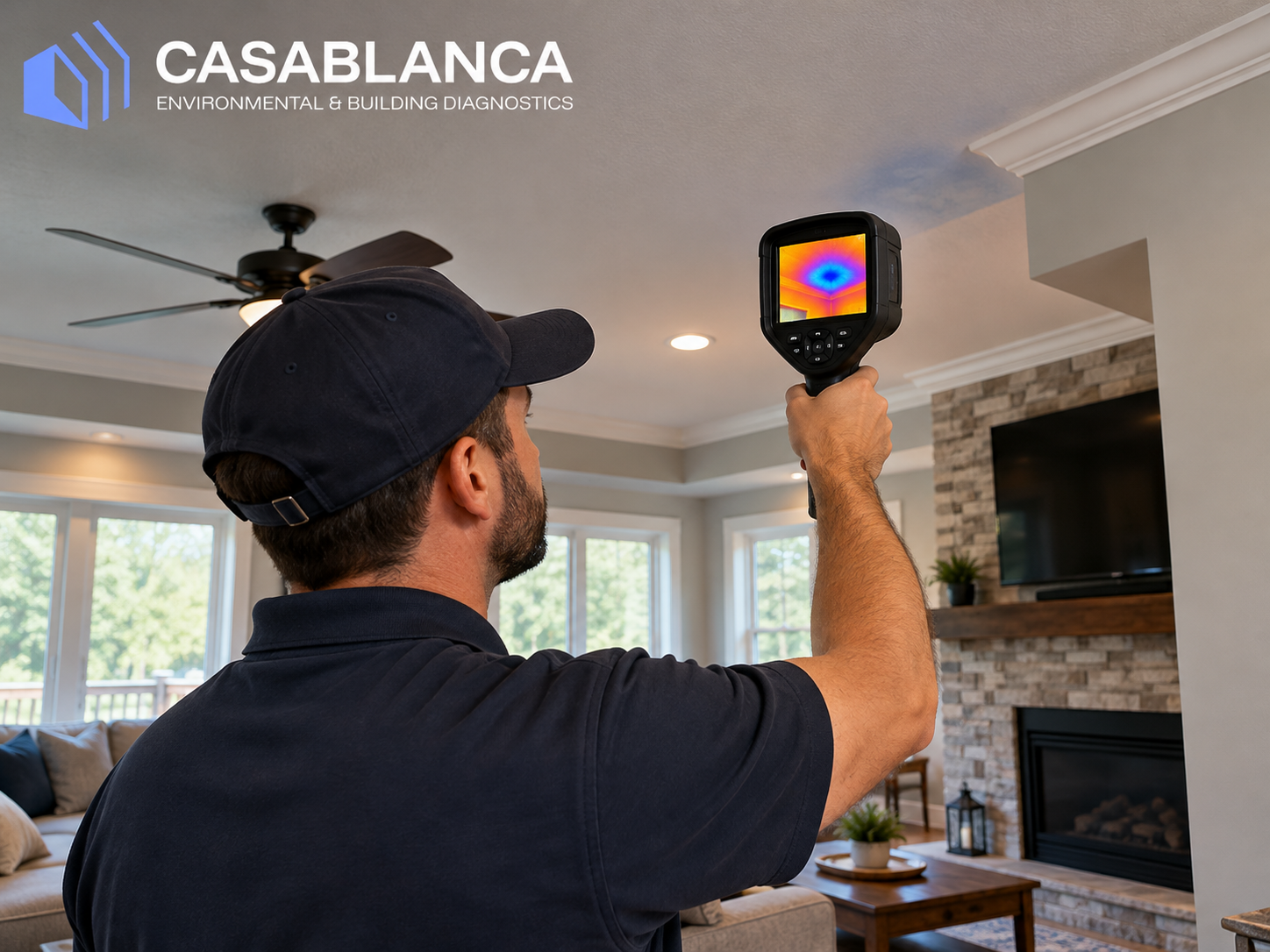
Infrared cameras detect the surface temperature and convert it to a colored image. The inspector reviews the second image and uses another tool to check any unusual spots.
Consider the picture as a heat map, rather than a photo of damage. A wet drywall, an uninsulated space in the attic, and a warm electrical connection all leave behind a different "print" of temperature. The order of the steps in our infrared home inspection routine is the same in each home:
Examine all exterior walls and ceilings, floors and windows, attic hatches and roof lines room by room.
Create comparisons between each of the strange patches and a normal photograph of the same spot.
Use a pin or pinless meter to test suspected moisture.
Measure temperature both inside and outside to ensure that the temperature is documented.
A caption and temperature range are provided for each image in the report. These images are helpful during a thermal imaging home inspection to identify potential problems and help verify the results of the reading.
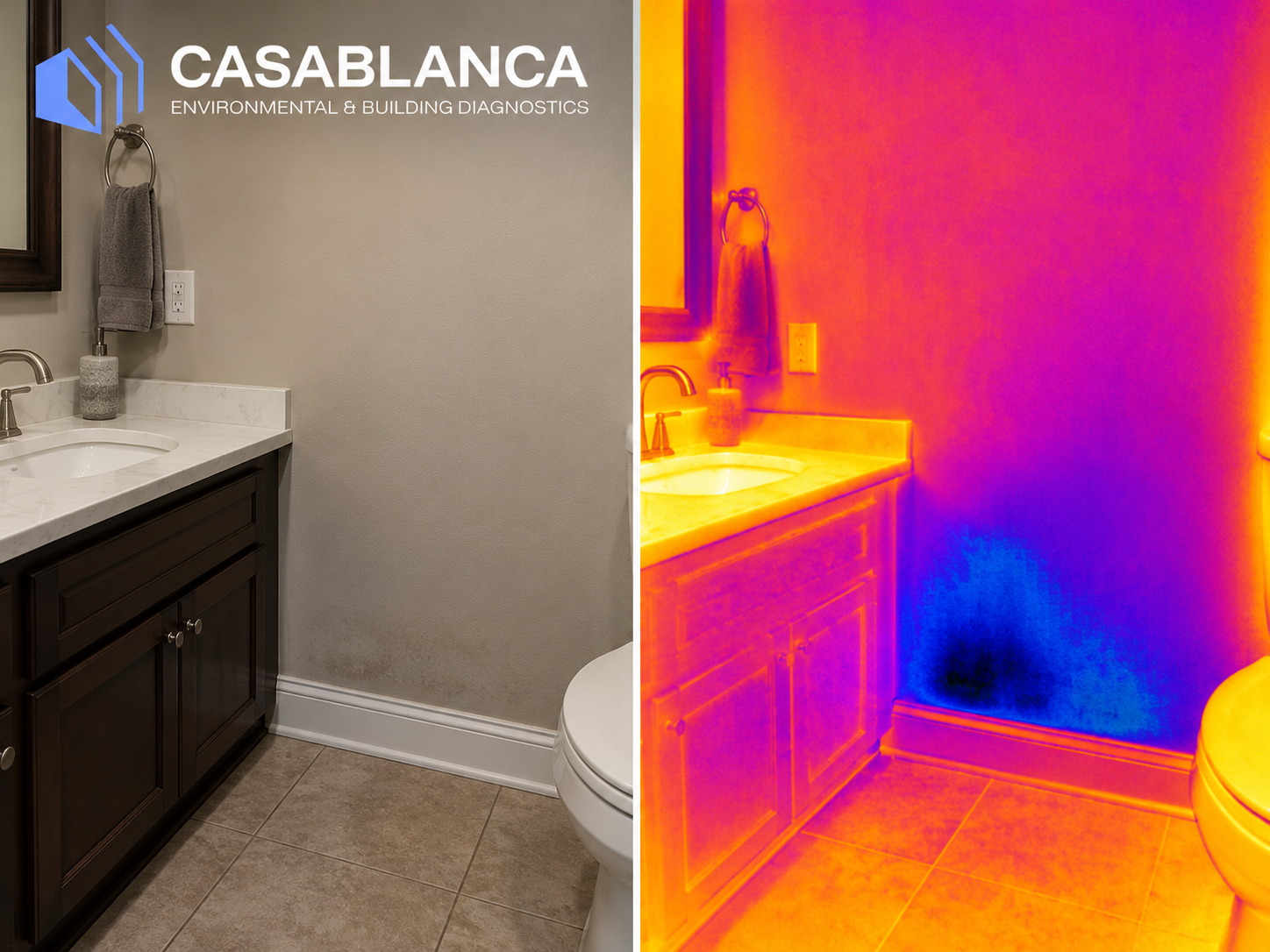
Tip: Ask any inspector for the plain photo beside every thermal image. Colors with no caption or scale are not ready to act on.
Hidden Problems Thermal Imaging Can Find
Thermal imaging can identify wet building materials. Areas where there is no insulation. Air leaks and overheating electrical components well before they are noticed on the surface. They normally start as a temperature change several weeks or months before a stain, smell or utility bill makes them evident.
| Problem | What the camera shows | Follow-up check |
|---|---|---|
| Slow roof or plumbing leak | Cooler, irregular patch where wet material holds a different temperature | Moisture meter, then roofer or plumber |
| Missing or compressed insulation | Uneven warm or cool bands on walls and ceilings | Open the attic or access panel |
| Air leaks | Streaks and plumes at windows, doors, outlets, and attic hatches | Visual check, then sealing |
| Overheated electrical connection | Hot spot at a breaker or outlet | Licensed electrician |
| Leaking hot-water line or failing radiant heat | Localized warm spot | Targeted testing |
The hidden problems thermal imaging surfaces are usually the expensive ones. Mold can form behind a wall when there is water there, and it can cost money! The numbers add up quickly and here's just a Hamptons and East End guide to the actual cost of mold removal. For buyers, it's a way of taking a guess and turning it into an item you can raise before closing on, for which you have proof.
Infrared Inspection for Homes: Air Leaks and Insulation Gaps
The two most common thermal conditions in older East End houses are air leakage and lack of insulation. Additionally, they are some of the easiest problems to repair and the fastest to recover from.
Infrared inspection for homes will reveal leaks as streaks and plumes around attic hatches, rim joists, recessed lights, window frames and window and exterior wall light outlets. Insulation gaps are an uneven band of insulation on a ceiling or wall.
There is a measurable payoff. According to EPA's ENERGY STAR program, air sealing and insulation savings can help homeowners save 15% on their heating and cooling bills or 11% on their total energy bills. On a house that spends $3,000 a year on heating and cooling (an example figure), 15% is $450 a year.
Sellers benefit too. A thermal imaging home inspection before listing lets you fix comfort problems a buyer's inspector would otherwise flag.
Tip: Make your reservation on a cold morning when the outside temperature is at least 10 degrees F colder than the inside temperature. The main indications of leaks and insulation gaps are probably noticeable at those times.
What a Home Inspection Thermal Camera Cannot Do
A home inspection thermal camera can not see through walls and can not measure water. It reads what is on the surface in front of it and nothing more.
Find out the limits first, before paying them:
The camera can't recognize it: Mold. A cool patch indicates moisture, and a meter verifies.
Glass: the regular window glass reflects IR and the camera will reflect it instead of what is behind it.
Bad conditions: They can conceal a problem or create an apparent one through direct sunlight, wind, rain and/or because of a slight temperature difference between the inside and outside of the building.
Calm images: A calm image does not mean a wall is dry.
The timing is important since moisture damage can spread. EPA recommends drying water damaged materials within 24-48 hours to avoid mold. It also mentions that growth may be possible even if materials dry during that period of time. It's why a thermal imaging home inspection should be used in conjunction with a thorough visual inspection and a meter reading, but not in place of a thorough visual inspection or a meter reading.
Tip: Clean thermal image is not a guarantee. It is good news! Even if the screen appears calm, state if a wall smells musty or a ceiling is stained.
Best Conditions for a Thermal Imaging Inspection
The best time for a thermal imaging inspection is when the interior and exterior temperature of the home vary by 10 degrees or more. This is typically November through March on the East End.
Larger gaps will produce sharper images, and the inspector must also have calm weather conditions:
No direct sun on the walls for several hours before the scan.
Light wind and no rain.
Normal thermostat settings held for the day before.
Buying in July? A scan can still go ahead for interior moisture checks, but expect fewer insulation and air leak findings. Tell us your closing date when you book. We will say plainly whether a thermal imaging home inspection will give useful results that week or whether waiting makes sense.
Infrared Home Inspection Cost on Long Island
Expect to pay about $150 to $250 when thermal imaging is added to a full inspection and about $300 to $500 as a standalone visit. These are estimated East End ranges.
| Service | Estimated price | What you get |
|---|---|---|
| Thermal scan added to a full inspection | $150 to $250 | Whole-house scan, captioned images, and meter checks |
| Standalone infrared home inspection | $300 to $500 | Same scope, but as a separate visit |
| Full home inspection, about 2,000 sq ft | $550 to $800 | Visual review of structure and systems |
| Full inspection plus thermal scan | $700 to $1,050 | Both services in one visit and one report |
Home Inspection Services on the East End
Our home inspection services cover the structure, roof, plumbing, electrical, heating and cooling, with thermal scanning as an added option. Every finding comes with photos so you can see what we saw.
A thermal finding in our report includes:
The location in plain language
The thermal image and its temperature range
A plain photo of the same spot
Indoor and outdoor conditions during the scan
The meter reading, if moisture was suspected
What we recommend next and how soon
Reports will be 24 hours (estimated) to 30 minutes. If you are considering hiring a contractor. Then try to ask what he or she says in the event of a thermal imaging home inspection report. Good language reads "temperature difference consistent with possible moisture," not "leak found."
Book Your Scan
Ready to see what your walls are hiding? To schedule a thermal scan as part of your next inspection, contact Casablanca Environmental & Building Diagnostics LLC at (631) 655 9855.
Frequently Asked Questions
What can a thermal imaging camera not see through?
Not able to see through to drywall, brick, siding, wood, insulation or most other solid building materials. This also cannot penetrate normal window glass, which would behave like a mirror reflecting infrared. What it picks up on a wall is surface temperature only.
What is the biggest red flag in a home inspection?
Ongoing water intrusion (stains, musty odor, soft wood and damp insulation) is the number one concern. Issues of water damage normally occur along with structural issues, mold or electrical issues.
Can someone see inside my house with thermal or night vision?
Not through solid walls. The outside will look warm if it is the window frame or roof surface, not rooms or people, with the thermal camera. Night vision amplifies light and is able to pass through a clear window but not a wall. The best protection is to close blinds or curtains.
What does thermal imaging show in a home inspection?
It reveals temperature trends that indicate possible moisture, lack of insulation, air leaks, overheating electrical connections and hot spots. All are leads that are checked by the inspector with a meter or further inspection.
How much does a thermal imaging inspection cost?
The price of an estimated East End is 150-250 (which is in addition to a full inspection), and a stand alone East End is anywhere from 300-500. The high end of the range is caused by large houses, multiple attics or tight access.
Can I add thermal scanning to a regular home inspection?
Yes. Request it when booking in, so the inspector can schedule around the weather. This scan is performed at the same visit as the plain photos and is also presented as a normal scan report next to the plain photos.
Do you confirm thermal findings before reporting them?
Yes. Anything that resembles moisture is given a moisture meter reading, and the report will include the moisture meter reading, conditions and recommendation.
Which areas do you serve?
We serve the East End of Long Island, including the Hamptons. Please call to check availability in your town.
Is a scan more worthwhile for older or coastal homes?
Often, yes. Older construction is more likely to be poorly insulated and air leaks and coastal humidity increase the chances of humidity problems. The best results are obtained during the late fall to early spring.
Conclusion
A house inspection is a visual inspection that will tell you what a house looks like today. A thermal imaging home inspection provides additional evidence of what's going on behind the walls and in the basement. Here costly surprises reside. It is a great tool to assist buyers in negotiating, sellers in preparing a home, and homeowners in detecting leaks early on in time, along with using a moisture meter and reporting truthfully.
Sources
ENERGY STAR, "Why Seal and Insulate?": Average savings based on air sealing and added insulation, as estimated by EPA.
U.S. EPA, “Mold Remediation in Schools and Commercial Buildings Guide: Chapter 4”: EPA guidance to dry water damaged materials within 24-48 hours to prevent mold.