
A commercial building inspection shows what a property will really cost you before you sign. Casablanca Environmental & Building Diagnostics LLC performs commercial building inspections across the East End of Long Island. This guide covers what gets checked and why it matters.
Below you will find a full commercial building inspection checklist built around local realities. Think septic rules, salt air, and seasonal tenants. Most national guides skip all three.
What Does a Commercial Inspection Include?
A commercial inspection covers the whole property from the parking lot to the roof. It also reviews the records behind the building.
Inspectors work through the building exterior, roof, structure, and interior. Then they test the HVAC, electrical, and plumbing systems. They finish with fire safety gear and accessibility. Every defect gets a photo and a note on urgency.
The scope shifts with the use. A restaurant needs a hard look at exhaust hoods and grease traps. A warehouse needs a hard look at the slab and the loading docks. An office leans on HVAC and accessible routes.
Know the limits too. A visual inspection cannot see inside walls or under slabs. Hidden problems call for extra testing and a licensed trade professional.
Occupied buildings add another limit. Tenant storage can block panels, drains, and access hatches. A good report lists every area the inspector could not reach.
How a Commercial Building Inspection Works Step by Step
The inspector reviews your documents first. Then comes an exterior walk, an interior walk, and a photo-rich written report. Here is the usual flow:
Scope agreement: You and the inspector confirm what gets covered and what does not.
Document review: Leases, permits, and past reports get a read before anyone steps on site.
Walk through survey: The inspector moves from roof to basement and records each system.
Report delivery: Findings arrive with photos and priority ratings.
Ask for the scope in writing and ask who will actually walk the building. The Certified Commercial Property Inspectors Association publishes a commercial standard of practice that many inspectors follow. A written scope also shows you which areas will need a specialist. Timing matters on the East End. Summer schedules fill quickly. Seasonal tenants can lock inspectors out of units.
Book early in your due diligence window so access problems do not eat your contingency days. Now that you know how the day runs, you can see what the inspector actually checks. Start outside because that is where water gets in.
Commercial Building Inspection Checklist: Site, Roof and Structure
Water is the first enemy of every commercial building. This commercial inspection checklist section starts with the site and works up to the roof and the frame. Check these items:
Parking lot cracks and trip hazards
Drainage and grading near the foundation
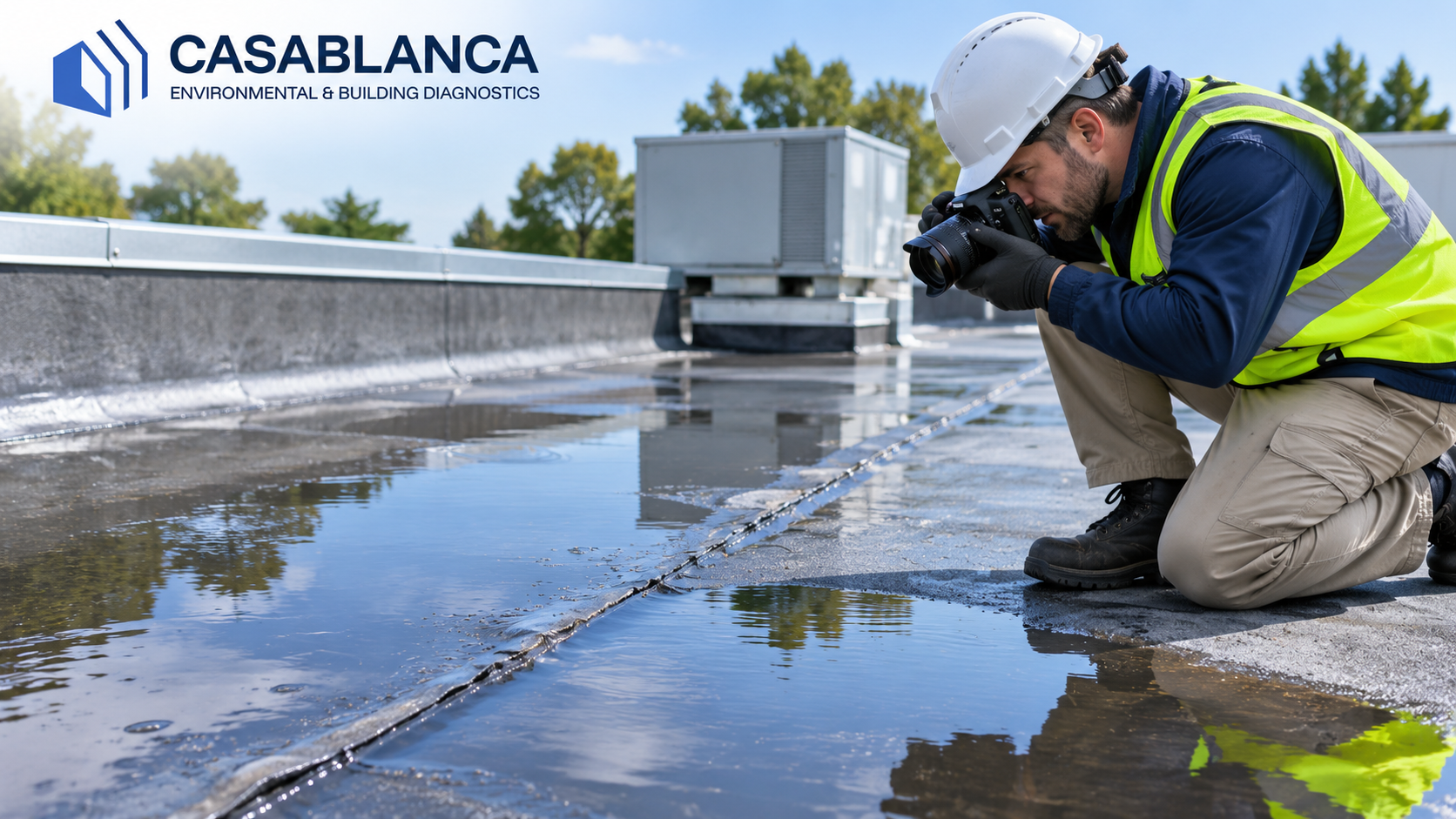
Roof membrane, flashings, and ponding water
Gutters and downspouts
Wall cracks and sloping floors
Window and door sealants
Flat roofs deserve extra time because many small commercial buildings use them. Standing water after rain shortens roof life and hides leaks until winter. Look at the transitions too. Where a roof meets a wall or an addition meets older construction is where most leaks start. Buyers should also understand the common causes of moisture intrusion, since hidden water damage can affect roofing, walls, insulation, and structural materials.
Roof and walls keep the weather out. The systems inside keep the business running.
Tip 1: Schedule the walk through within a day or two after rain when you can. Wet pavement shows ponding that dry weather hides.
Building Systems Every Buyer Should Test
Electrical, plumbing, and HVAC failures drive most post closing repair bills. Inspectors judge each one by age, condition, and capacity.
Start with the electrical panel. Look for corrosion, double tapped breakers, and missing labels. A new tenant with heavy equipment may need more power than the building can deliver. An electrician should confirm that before you commit.
For HVAC, ask for maintenance records. A newer unit that was ignored can fail before an older unit that was serviced on schedule. For plumbing, check water heaters, drain lines, and shutoff valves. Older buildings may justify a sewer scope as well.
Septic matters more here than most buyers expect. Many East End commercial buildings sit outside sewer districts. Suffolk County rules now require a commercial property that changes use or expands or does substantial new construction to upgrade to a nitrogen-reducing septic system. A system that works today can become a major expense the day your plans change.
Fuel tanks need attention as well. Suffolk County requires registration of petroleum storage tanks and abandoned ones under Article 12 of the Sanitary Code. Ask the seller for the paperwork.
For properties with private wells, buyers should also understand what a water quality test checks for before completing their due diligence. Working systems are one thing. Safe exits and fire protection are another.

Fire Safety and Accessibility Items Inspectors Flag
Inspectors confirm that exits, alarms, sprinklers, and emergency lights are present and visibly in working order. They also note accessibility barriers at entrances, restrooms, and parking. A visual inspection is not a fire code certification. Still, the visible clues tell a lot. Look for blocked exits and damaged fire doors and extinguishers with expired tags. Ask for service records. A missing record counts as a finding by itself.
Give accessibility its own pass. Check ramps and door widths, restroom access, and accessible parking. Retrofit costs can run high, so price them before you close. Local paperwork matters here. Each East End town runs its own building department and issues its own certificate of occupancy. A certificate that does not match the current use is a red flag. Confirm it with the town directly.
Tip 2: Photograph every inspection tag on extinguishers and alarm panels. Old dates show a system nobody has touched.
Visible safety gear is only the start. Some risks hide in the ground and the water.
Environmental and Specialty Add-Ons Worth Ordering
Most buyers need the general inspection plus a Phase I environmental site assessment. Older or specialized buildings may also need a sewer scope, thermal imaging, or mold testing.
People often ask what inspections are needed when buying a commercial property. Your lender and your building type set that list. A medical office and a machine shop will not share one.
The federal EPA recognizes that standard for all appropriate inquiries. It helps protect a buyer from inherited cleanup liability.
Suffolk County adds local weight. County health inspectors watch gas stations and dry cleaners more closely because they pose the largest risk to drinking water. If your target property has either history, order the environmental review before anything else.
Reports are only as good as the records behind them.
Why Do Commercial Property Documents Matter?
Documents show what a walk through cannot. They reveal repair history and unpermitted work and who owes what. Request roof warranties, HVAC service logs, permits, and prior inspection reports. Repeated roof patches or frequent sewer calls tell a story. So do utility bills that jump every winter.
Add East End items to the request. Seasonal sellers can be hard to reach in winter, so start the paper chase early. Ask for septic records, tank registrations, and town approvals for past additions. An addition built without a permit becomes the next owner’s problem.
Documents also give you leverage. A pattern of deferred maintenance supports a price reduction or a repair credit. With the report and the records in hand, you can decide what to do next.
How to Read the Report and Decide What Comes Next
Sort every finding into three groups. Safety issues come first, then near term repairs, then long-term capital items. Price each group before your contingency period ends.
Compare the report against your commercial building inspection checklist. Any area the inspector could not reach needs a follow up visit. Ask for cost to cure estimates on major defects. Use those numbers to negotiate price or repair credits.
Pro Tip: Ask your inspector to rank findings by consequence rather than by system. A leaking roof above stored inventory outranks a dozen cosmetic items.
Key Takeaways
A commercial building inspection reviews the site, roof, structure, systems, and safety gear, and records them. Your commercial building inspection checklist keeps that review organized.
Write the scope down before you book because building type changes everything.
East End buyers should check septic status and tank registrations and Pine Barrens limits.
Order environmental add-ons based on use and lender needs.
Rank findings by consequence before you negotiate.
Frequently Asked Questions
What inspections are needed when buying a commercial property?
Most deals need a general commercial inspection and a Phase I environmental assessment. Add a sewer scope, roof evaluation, or mold testing when age and use call for it. Your lender may require others.
What should be included in an inspection checklist?
A solid commercial inspection checklist covers the site, roof and structure, interior and systems, fire safety and accessibility, and documents. Add environmental items that fit your use. The full commercial building inspection checklist sits at the end of this post.
What is the biggest red flag in a home inspection?
Active water intrusion and structural movement rank highest. Both point to hidden damage that costs a lot to fix. In commercial buildings, the same signs matter even more because tenants and income are at stake.
What does a commercial building inspector look for?
Inspectors look for defects in the roof, structure, systems, safety gear, and site. They also note neglected maintenance and missing records. The goal is to show condition and cost rather than to hand out a grade.
What is included in a checklist?
Each checklist entry names a component and records its condition and urgency. Many also include a photo reference and a repair estimate. Use a commercial inspection checklist to compare the inspector’s scope against your needs.
What can make you fail an inspection?
A commercial inspection does not pass or fail a building. Safety hazards, active leaks, and dead fire systems can still sink a deal. Town code officials can also withhold a certificate of occupancy for life-safety or permitting issues.
Conclusion
A commercial building inspection helps buyers understand a property's actual condition before committing to a purchase. Review the roof, structure, electrical, plumbing, HVAC, fire safety, accessibility, and environmental concerns. Use the checklist in this article to identify costly repairs, request specialist evaluations, and make informed decisions during due diligence.
Casablanca Environmental & Building Diagnostics LLC provides commercial building inspections across the East End of Long Island. Their local knowledge helps buyers assess property conditions, recognize potential concerns, and plan their next steps with greater confidence. Arrange an inspection before closing to understand what you are buying and avoid unexpected repair expenses.
Get a Professional Commercial Building Inspection Before You Buy
Planning to purchase a commercial property on the East End of Long Island? A professional inspection can help you identify structural concerns, aging building systems, moisture problems, and environmental risks before closing.
Call Casablanca Environmental & Building Diagnostics LLC at 631-655-9855 or email bayrona@casablancaebd.com. You can also review our commercial building inspection services page for details.
Sources
EPA All Appropriate Inquiries :The federal rule that defines the Phase I assessment standard buyers use to claim landowner liability protection.
Suffolk County Dept. of Health Services, Article 12 :Explains registration of petroleum and hazardous material tanks, including abandoned ones.
