
What Does a Home Inspector Look for During a Pre Purchase Inspection?
When you hire professional home inspection services, they will ask you one question before you sign: What is wrong that you can't see yet with this house? In NYC, that's a licensed occupation. Nobody can inspect a home for pay without a state license from the Department of State. A pre purchase home inspection is a visual and functional review of the roof and the structure and every major system.
The inspector tests what can be reached and operated and then writes it up. You can see how that process runs on this pre-purchase home inspection page for the East End of Long Island. Here is what generic national checklists skip. A house in Southold or Sag Harbor sits on sandy soil near salt water. The water table is high. Many homes run on private wells and cesspools.
Suffolk County even writes one of those steps into law. A home on a private water system generally can’t close until its well water is tested unless the buyer waives the test in the contract. The county health department estimates 40 to 45 thousand private wells in Suffolk County. This guide covers what inspectors examine and how the day runs and what to do with the report.
What Does a Home Inspector Look for in an East End House?
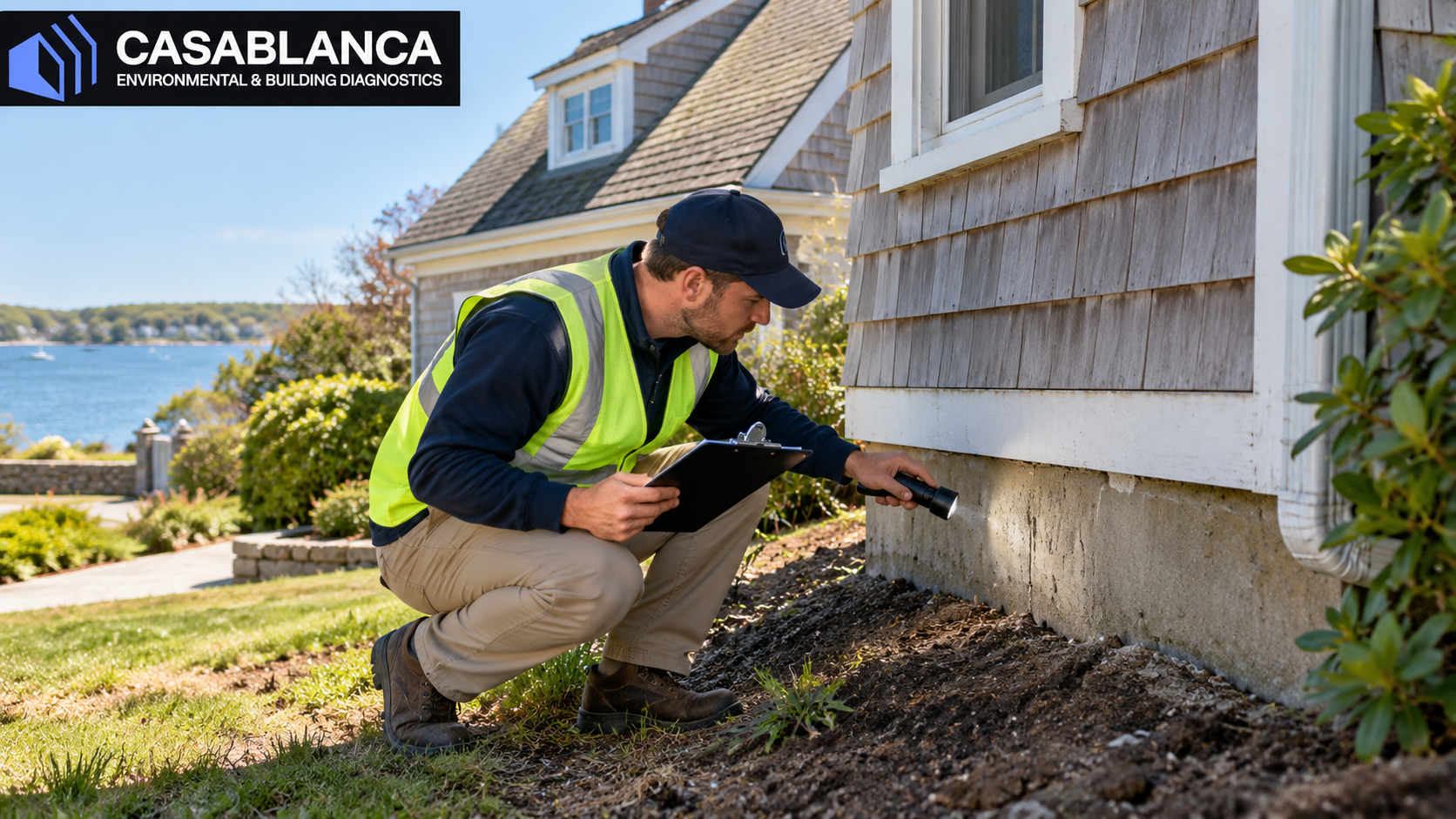
A home inspector looks for defects in the structure and the safety systems and the major mechanical systems. That means the roof and the foundation and the electrical and plumbing and heating and cooling and any sign of water or pests. The walk starts outside. Ear the shingle dwelling at Peconic Bay, the initial question that is easy to answer is this: does the ground slope away from the foundation?
A flat grade forces roof runoff to enter the sill despite quick draining sandy soil. From there the inspector moves through the attic and the living spaces and down into the basement or crawlspace. Nothing gets torn open. The report covers what can be seen, reached, and tested.
Home Inspector Checklist: Systems and Warning Signs
Home inspector’s checklist moves from roof down to foundation. Every system is tested for age and safety.
| Area | What the Inspector Does | What Raises a Flag |
|---|---|---|
| Roof and gutters | Checks shingle wear, flashing and drainage | Curled or missing shingles or stained ceilings below |
| Foundation and grade | Looks for cracks, settlement and soil slope | Stair step cracks or soil pitched toward the house |
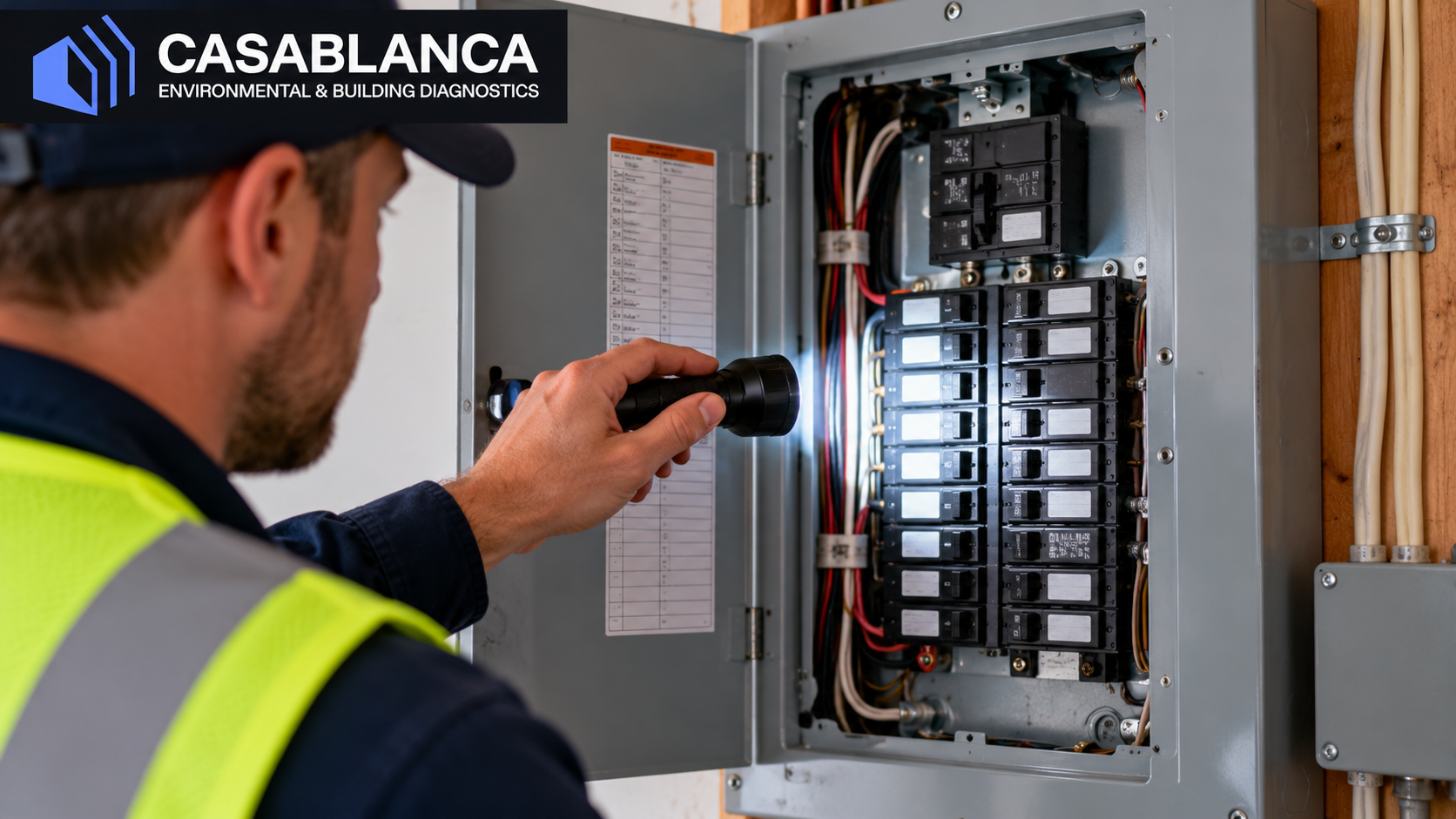
| Electrical | Opens the panel and tests outlets and GFCIs | Double tapped breakers or old fuse panels or knob and tube wiring |
| Plumbing | Runs fixtures and checks pipes and the water heater | Slow drains or corroded supply lines or an aging tank |
| Heating and cooling | Runs the system and checks its age | Rusted outdoor units or short cycling |
| Attic and insulation | Checks ventilation and insulation depth | Dark roof decking or bath fans venting into the attic |
| Basement or crawlspace | Looks for moisture, sill rot, and pests | White mineral crust on walls or soft framing or standing water |
Age matters as much as condition. A furnace that still runs but sits near the end of its life goes in the report anyway because you will be buying its replacement soon.
What Home Inspectors Check Beyond the Big Systems
Home inspectors' checks also include small safety items. Smoke and carbon monoxide detectors and stair railings also garage door sensors and dryer vents all get tested. These fixes cost little but they show how the owner maintained the house. Cleaner than a fresh paint is a dryer vented into the attic or a missing GFCI outlet caused by a sink.
Tip: Make sure all utilities are on and all panels are unlocked and clear the way to the attic hatch before arriving at the home to see it. Blocked access means “not inspected” in the report and that is a gap you pay for later.
What the East End Adds to Every Home Inspection Checklist
The inspection checklist for this area requires extra lines for clean water and wastewater. A general list from a national site leaves all four out. Most of Suffolk County has no public sewers. The county health department requires registration when a cesspool or septic system is replaced and the county code spells out when a nitrogen reducing system is required. A standard visit usually doesn’t pump a cesspool or run a camera through the lines.
The inspector notes the age and location of the system and any odors or soggy patches in the yard. If those notes raise doubts a separate septic inspection comes next. Flood exposure is the other local gap. New York’s seller disclosure form now asks about flood history so read it closely. In the basement the inspector looks for a sump pump and tide lines and white mineral crust on the walls. Salt air adds its own damage.
How Home Inspection Services Work on Inspection Day
Home inspection services for East End houses take about two to four hours. Larger properties, with guest houses and pool equipment, have a longer time frame.
Schedule the visit as soon as possible in your contract and make sure there is an inspection contingency.
Request that all utilities be turned on for you by the owner and ask the owner to clear all access to the panel and attic (crawlspace).
Go outside and meet the inspector at the property.
Go through each system with them and ask questions as they are being tested.
Check the pictures and notes with the inspector before you leave.
Read the written report when received and decide which findings require a specialist.
Bonus Tip: Place yourself next to the inspector at the electrical panel. Handwritten labels and mismatched breakers tell you more about past renovations than any listing description does.
Buying a House Inspection Mistakes That Cost Buyers Later
The most expensive buying a house inspection mistake is assuming one visit covers everything. Well water, septic systems and wood destroying insects generally require separate tests. Waiving the inspection contingency to win a bid comes second. It hands you every hidden defect with no way to renegotiate. On the East End that can mean a failed well or a rotted sill discovered after closing.
Treating cosmetic items like deal items is the third mistake. Peeling paint isn’t a repair request. A soft sill plate is. If buyers provide the seller with a list of 40 items, they are not as reliable with the 3 that really count. Ask the inspector if the home was built before 1978 and if it might have lead paint.
How to Read Home Inspection Findings Without Panic
Findings of a home inspection fall into three groups: safety hazards and major repairs and routine maintenance. Only the first two should change your offer. If it is a serious issue, you can request the seller to make repairs or offer a credit or a reduction in price. Understanding home inspection costs on Long Island can also help you budget for the inspection and any additional specialist evaluations. You can walk away if there is an inspection contingency in your contract.
Most reports run long. Dozens of items is normal in an older house. Count severity and not volume. A loose doorknob and failing roof flashing share a page but not a priority.
If it is a serious issue, you can request the seller to make repairs or offer a credit or a reduction in price. You can walk away if there is an inspection contingency in your contract.
If it's a big one, have a structural engineer or a licensed electrician check it first before negotiations. An appraisal is a different tool. It values the house for your lender and doesn’t test the systems.
Key Takeaways
A licensed inspector reports what he can see and reach, not what is behind walls.
There is a need to address wells and cesspools as well as flood exposure on the East End.
Prioritize findings with safety first, structure second, and cost third.
What to Weigh Before Booking a Pre-Purchase Home Inspection
Choose among home inspection services on license and report quality and local knowledge and not on speed. Those three factors decide whether your report holds up at the negotiating table.
State license
Request the New York license number and verify with the Department of State. A license is the bottom line, ASHI is a code of ethics.
Sample report
Request one before you book. Good reports use photos and plain language and rank each finding by severity.
East End experience
An inspector who has seen salt damaged condensers and cesspools and flood prone crawlspaces knows where to look first.
Add on tests
Ask what the visit excludes. Water and radon and mold and wood destroying insect checks are the usual extras. Confirm the inspector will take follow up questions after the visit.
Questions Buyers Ask Before Closing.
What are the biggest red flags in a home inspection?
The two biggest red flags when looking at a home inspection are active water intrusion and structural cracking and obsolete electrical wiring. Even signs of unpermitted additions and a failing roof are high. All can argue for a repair bill or for a lower price.
What gets checked on a pre-purchase inspection?
Pre purchase home inspection: Roof/structure, electrical, plumbing, heating/cooling, attic and interior. Defects are recorded by the inspector in writing using photographs. Usually, you have to take water and radon and other tests separately.
What is the first thing an inspector wants to see?
First, an inspector is interested in ease of access and the provision of working utilities. The walk then begins outside, and there are indicators early on that things are going wrong with the grading and roof edges, as well as with the foundation walls. When there is a locked panel or a blocked attic hatch, it slows down the entire visit.
What is a deal breaker in a home inspection?
A deal breaker is a problem that threatens safety or structure or costs more than a price change can cover. Foundation failure and active mold and a contaminated well and serious electrical hazards are common examples. Your contract and your attorney decide how you can exit.
How much do home inspectors normally cost?
Cost depends on the size and age of the house and the number of outbuildings and any add on tests. A large East End property with several structures costs more than a starter cottage. Ask for a written quote before booking so nothing surprises you.
Who are some reputable home inspectors in New Braunfels Texas?
This guide focuses on East End Long Island so it doesn’t name inspectors in New Braunfels. For a Texas property verify the inspector’s license with the Texas Real Estate Commission and ask for a sample report and proof of insurance.
What is usually included in a home inspection?
Most home inspection services include the structure and roof, exterior, electrical, plumbing and heating and cooling, interior and attic. The inspector provides a written report and photos.
A Final Word Before You Book
Start with the contract and not the checklist. Confirm your inspection contingency window and then book the earliest slot an East End inspector can give you. Busy buying seasons fill calendars fast and a rushed inspector misses things.
Pro Tip: Ask the inspector to name the three findings they would worry about most. A ranked answer from someone who saw the whole house beats a sixty page report you skim at midnight.
Get a Second Set of Eyes on the House
Casablanca Environmental & Building Diagnostics LLC handles pre purchase inspections for buyers across the East End of Long Island. Its home inspection services are built around the visit buyers book before closing.
Contact Casablanca Environmental & Building Diagnostics LLC at 631-655-9855 or email bayrona@casablancaebd.com to discuss your specific needs. Call before you remove your inspection contingency and not after.
